IDF 2024
Liquid Ranah
by :
Linda Mayasari
Arco Renz
Nia Agustina
River Lin
Curatorial Statement
IDF 2024 Liquid Ranah, invites artists and audiences to immerse themselves in open-ended possibilities of fluid motion. With liquid forms, identities, memories, voices, gestures, actions and minds, we celebrate how contemporary dance is enriching our everyday interactions with places, communities and media.
Liquid Ranah combines the English word for Indonesian “cair”, and the Indonesian word for English “realms” and is in itself a movement between two languages, a dynamic field within the spectrum of linguistic realms. Liquid Ranah is not a physical location but a metaphorical site representing the transformative power of contemporary dance. This metaphorical framework indicates that the body, choreography, and stage are not solid in nature but fluid, constantly corresponding and negotiating with meaning, marked by history, and significant both psychologically and communally, thus conveying profound messages about our society and ourselves.
Liquid Ranah embodies notions of fluidity and diversity, and reshapes our own adaptability and resilience in an ever-changing world, including ways of choreographing our visions and bodies. As old binary frameworks to approach traditions, languages, cultures and genders are no longer sustainable, becoming liquid is a tactic forward and upward – socially, bodily and affectively.
Join IDF 2024 and journey through these liquid realms, where the stage becomes a space to experience joy, dialogue and empowerment.
IDF 2024 Programs
Evening Performances
Kampana Performances
Site Specific Performance

A prayer of gratitude and hope that never ends. The vibration of prayer that penetrates into the body is a mystery that will never be answered. The beginning and ending of prayer follow our journey. A simple prayer and a simple body, both will vibrate forever. Selapan is a result of a cross-disciplinary experimentation that places dance and ethnomathematics into a dialogue, responding to the Borobudur temple.

All-white, solid white yellowish to gray. Hard, medium and compact rocks. Lumps, shards, crumbles, brittleness, dissolves and precipitates. Paste and change appearance. The mechanical body becomes cosmic.

0-Excelsior is an offer to search for emptiness through exploration of sites in our surrounding area, which are visualized with sensual action interventions to uncover other realities in everyday spaces.

Dermaga Bincang Tari is a platform for critical choreography dialogs in the form of a virtual symposium. This program is intended to be a space for exchange of ideas for dance and interdisciplinary artists as well as researchers, local or international, whose practices relate to body discourse in the context of the dynamics of contemporary society today.

“I-Ruang” in ritual reality is a sacred place where ritual activities occur. The “I-Ruang” is attached to the body of a Wadian -a healer in the Dayak Ma'anyan tribal community in Central Kalimantan- which they carry with them when performing rituals at the house of the person they are healing.
“Paradox: The Nebulous (part 1)” departs from the idea of dream research and its relation to the conscious body and the unconscious body.
The title “in-” is inspired by the English prefix “in-” and the Japanese word "陰 (in) = darkness / shade / shadow". "陰 (in)" was feared and admired by the people, and was the source of imagination.
“Welcome” is part of 'Choreographing in the Cloud,' a series of studies that started in 2020 through an archive of collaborative workshops, lecture performances, and video projects created by Buboy Raquitico as an attempt to adapt to the limitations posed by the COVID-19 pandemic in pursuing artistic work virtually.
"MAYARI" departed from the artist’s experience during the pandemic and carried out self-isolation. Being cooped up in a room does not have to be boring, but it can be an opportunity to dive deep into exploring yourself.

An online public discussion for choreographers involved in Indonesian Dance Festival’s program, Layar Terkembang 2021 Virtual Bodies series. Five choreographers will share their artistic processes in relation to the curatorial theme, Virtual Bodies.

“Titik Koma Koma” emerged from an intentional interpretation of how the body is positioned in context to the process. Their current being is the result of studying past ignorance. In their journey, each step becomes a space that cannot be repeated nor revisited. This space turns into an abstraction and cannot be mapped.

What happens if a device becomes our external organ? “Cyborg” explores the dependent relationship between the body and technology. This dependency starts from the conscious process of downloading the program into the human body.

“Pigura” refers to a frame that is oriented towards limiting, protecting, distinguishing, and making an object special in a spatial context. In many cultures, the ”body”is framed within a special social frame. There is a paradoxical question from that reality: does the special frame protect, or does it cage the body?

Humans are social creatures, who only function when they coexist and interact with one another. But before reaching that stage, one has to mature and grow into adulthood.

The identity attached to an individual brings along behavioural requirements to follow social rules according to gender, religion, age, and others. However, what happens if identity is not attached to humans?

“Taulang” (meaning “repeated”) is a reading of a figure that has been verbally abused since childhood, in what should be the safest space - home. It often happens in the relationship between parents and children, but awareness is often absent within such a relationship.

I set a daily ritual of walking and dancing in my neighbourhood, as a way of mapping through bodies and movement. I try to find dance in this neighbourhood: what dance already exists here, who dances, where does it happen, what does dance mean, to them, in this place…

“Land Me” was inspired by a story of a woman who feels the memories of her past body and grows into another, one that has not been found in her sense of life.

“Dancing of Lament: Ibuku Menangis, Bumiku Meronta” starts from an anxiety about the fading relationship between human and mother nature.

The events your body goes through are connected to the imagination of a practice, to which the process of life takes place every moment so history can continue to reign in the mentality of life. How farmers lose their land to grow crops.

The traditional Tidung people in North Kalimantan believe in a traditional healing ritual known as besitan. This ritual is performed to cure the condition called selinat, which refers to a state in which a person loses control over himself.

When the universe offers the hero a new unknown path, be it a space or place, the first thing that appears within is fear, doubt, uncertainty and anxiety. The unknown is always scary. The hero begins to run away from responsibility, from circumstances, from reality, from his own fear, but it was not there.

Cherish your piece of heaven, cherish all you have, for all shall be gone when the time comes. Your love, your legacy, your life, have you truly lived it to the fullest?

An online public discussion for choreographers involved in Indonesian Dance Festival's program, Layar Terkembang 2022 Body and Rasa in Terra Incognita. Thirteen choreographers and 2 curators will share their artistic processes in relation to the curatorial theme.

Dermaga Bincang Tari is a critical choreography dialog platform that invites multidisciplinary artists and researchers that focus on body language, technology, and digital platforms, be it local or international.

Through reflection and research, IDF 2022 curatorial team reinterprets “rasa”, while exploring its conceptual footprints from different cultural experiences. This effort is intended to offer alternative perspectives on “rasa.” This dialogue opens up opportunities for the audience to peek into IDF’s curatorial behind-the-scenes alongside four speakers involved in the formulation of RASA: Beyond Bodies, the festival theme for 2022.

The spectres of choreography in the context of this archive exhibition has nothing to do with the astral concept where psychic phenomena take place. The spectres here, in contrast, is closely related to the history of materialism concept, where various cultural and artistic dance practices are formed. This exhibition archive is put together to mark and get to know the spectres of choreography that shadowed our past dance practices, ones that we inherit today.

IDF 2022 Opening Night is an opportunity to celebrate the 30th anniversary of the festival. Within 7 days, the festival will host 7 evening performances, 6 Kampana performances, 8 workshops, 4 Dance Talks, Vasana Tari archive exhibition, and Lokapasar – a retail area for Indonesian products and IDF limited edition merchandise in collaboration with local communities.

The work “SILO” explores the Islamic custom of tahlil (the act of repeatedly reciting the sentence “la ilaha illa Allah”, which means “there is no other god worthy of worshiping, other than Allah” as a prayer ritual), in this context seen as the central motoric movement around the torso. The work is a vertical dialogue method between him and the Holy One through repetitive and personal movements.

Instead of considering limitations as a constraint, it can actually be seen as guidelines for achieving freedom. This method of limitation is a space for body construction that Hari Ghurur works on to explore new possibilities of repetitive motion, so that organic and expressive motion emerges.

Imagination enables humans to create or transform something ordinary into the extraordinary, even when its form is still a fleeting thought in mind. This workshop hopes to be a space to spark participants’ creativity in using the body, things, and spaces around them.

The important thing to note from IDF's curatorial practice is the collaborative approach that involves several people. This allows IDF's artistic vision to be built and realized through various perspectives. In 2022, IDF will work with six curators across generations and countries to develop and reiterate the theme RASA: Beyond Bodies into all the elements of the festival.

Reality has always been augmented—by the limits of our human perception. “Sky Blue Mythic” sees the body alienated, and the alien embodied. Worlds loom, times loop, gestures distill and meanings distort.

Working with the body and voice, Angela Goh invites participants to explore the mechanisms of choreographic construction.

"Paradox" departs from the artist’s research about dream and its relation to the body. How the conscience and the unconsciousness take over the body in turn, like two separate entities that create a whole being.

“Body Tarekat” is a solo performance that both builds on and departs from physical practices while doing “tarekat”, specifically the Qadriyah tarekat* from Aceh. Tarekat, in general context, is a method or path to get closer to The Almighty by praising his name. For the choreographer, tarekat is life, a way to perceive life and existence itself.

The game Gobak Sodor and Bentengan is a collective childhood memory. Not only does it recall fun memories, this game also activates a crucial bodily process.
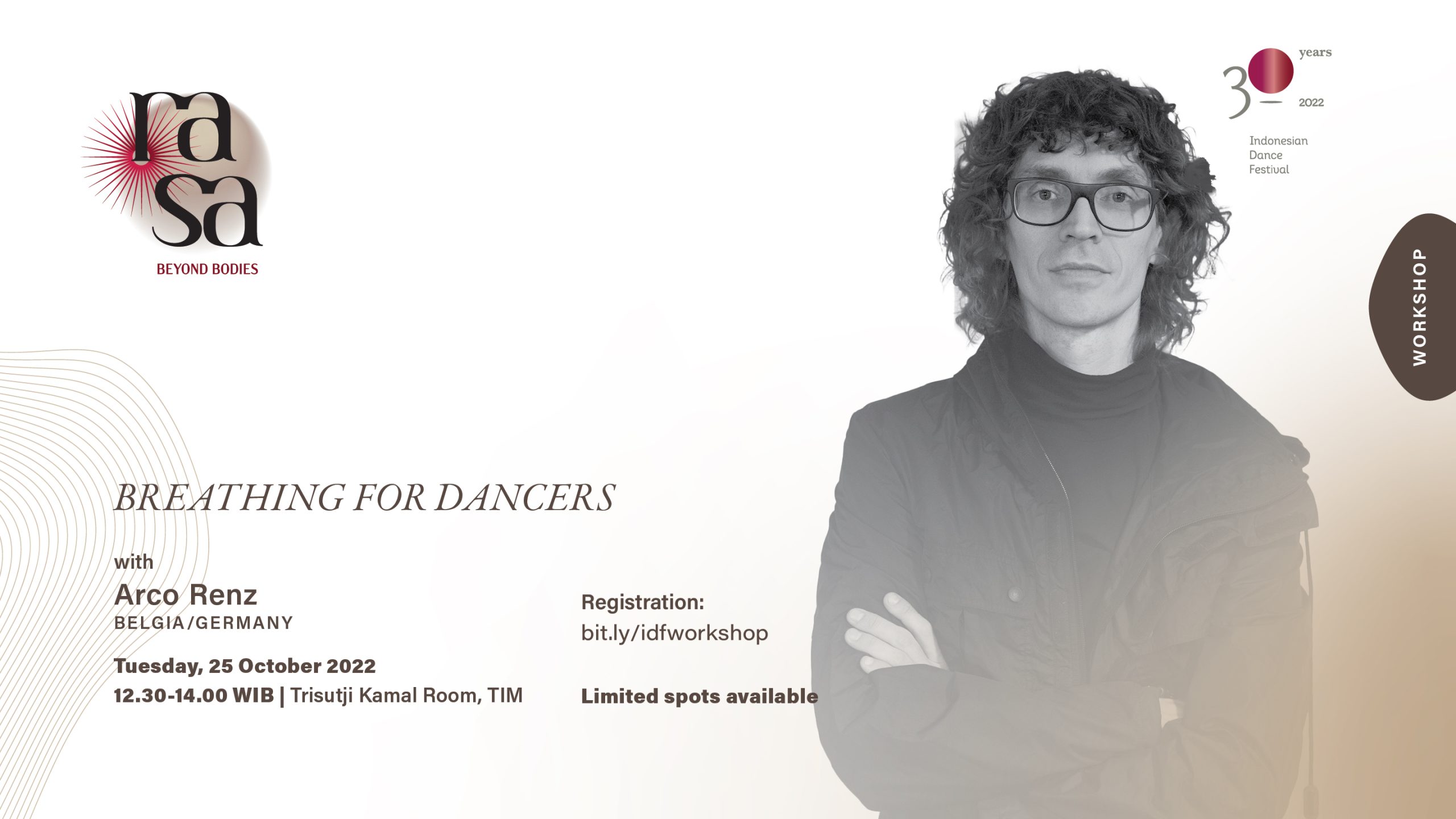
This Masterclass introduces the core principles of Taiji Quan and their creative application in the performing arts. We will practice a set of physical principles relating to breathing patterns and the merging of opposing poles such as in-out, open-close, gather-disperse.
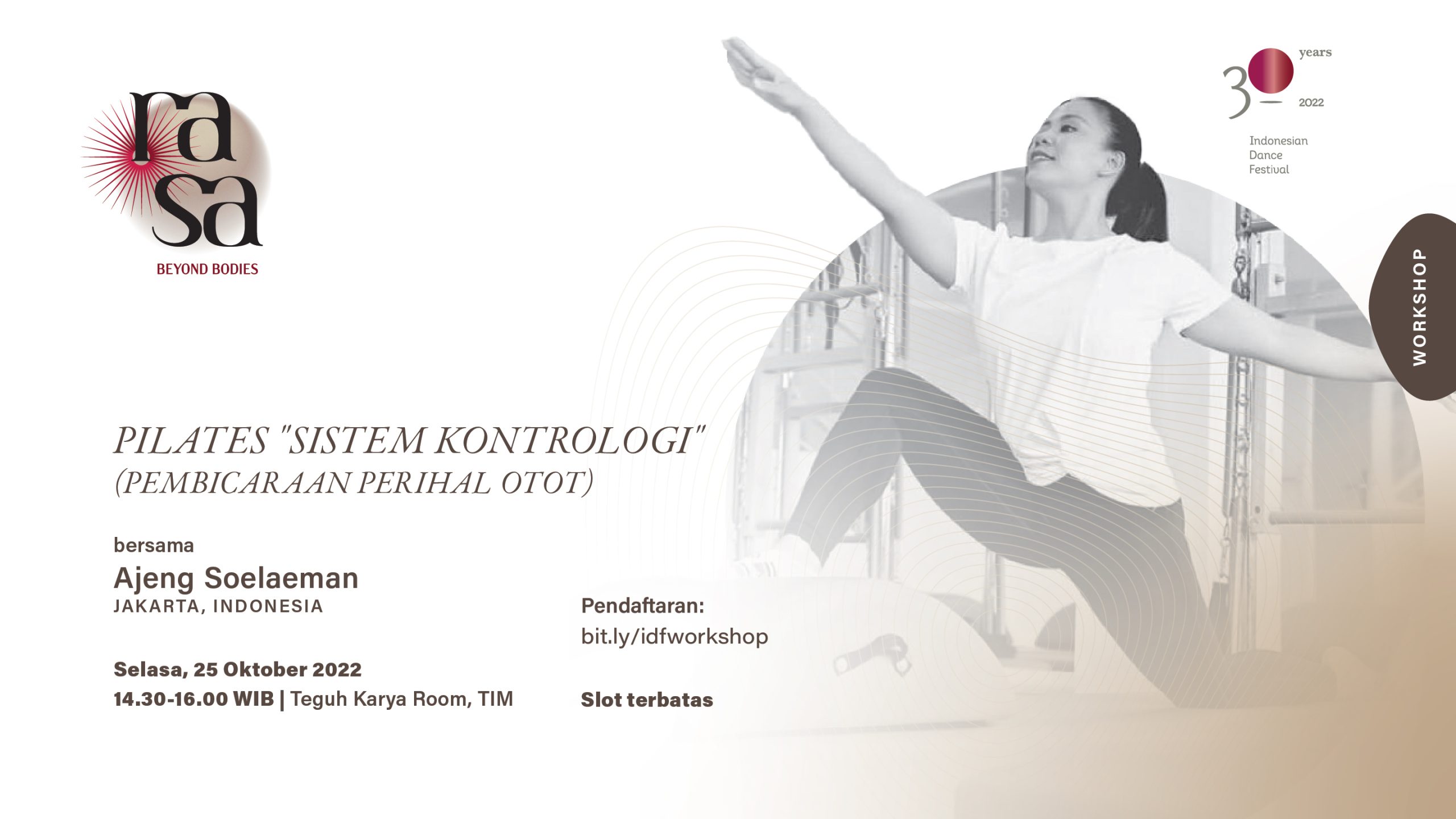
In the body, muscles are the main connective tissue that regulates all our activities. In this class, participants are invited to increase muscle awareness which is crucial in carrying out the multiple functions of the body.

In this conversation, the speaker will exchange their experiences of the art laboratory practice before reflecting on the dynamics of the arts and social fields encountered in Indonesia, regional and international.

“Senam Kota Kita” is a calisthenics/dance performance specially designed for the capital citizens at IDF 2022. Gymnastik Emporium offers a different perspective, seeing calisthenics not just as a physical sport, but also its aesthetic sense.

“No. 60” is not a choreographic pose or movement but it is a “principle of the dance practice” that consists of the combination of six elements. Participants will learn about the six elements and how to adapt them in order to find their own dance identities.

“Museum II: Ridden” is a reflection/performance that presents a vocabulary of motion centered on the exploration of mutation and the sense of alertness in the body. The exploration presents bodies that have experienced disasters: the three dancers on stage are ridden with rhythmic movements, filled with fragrance and mantra.
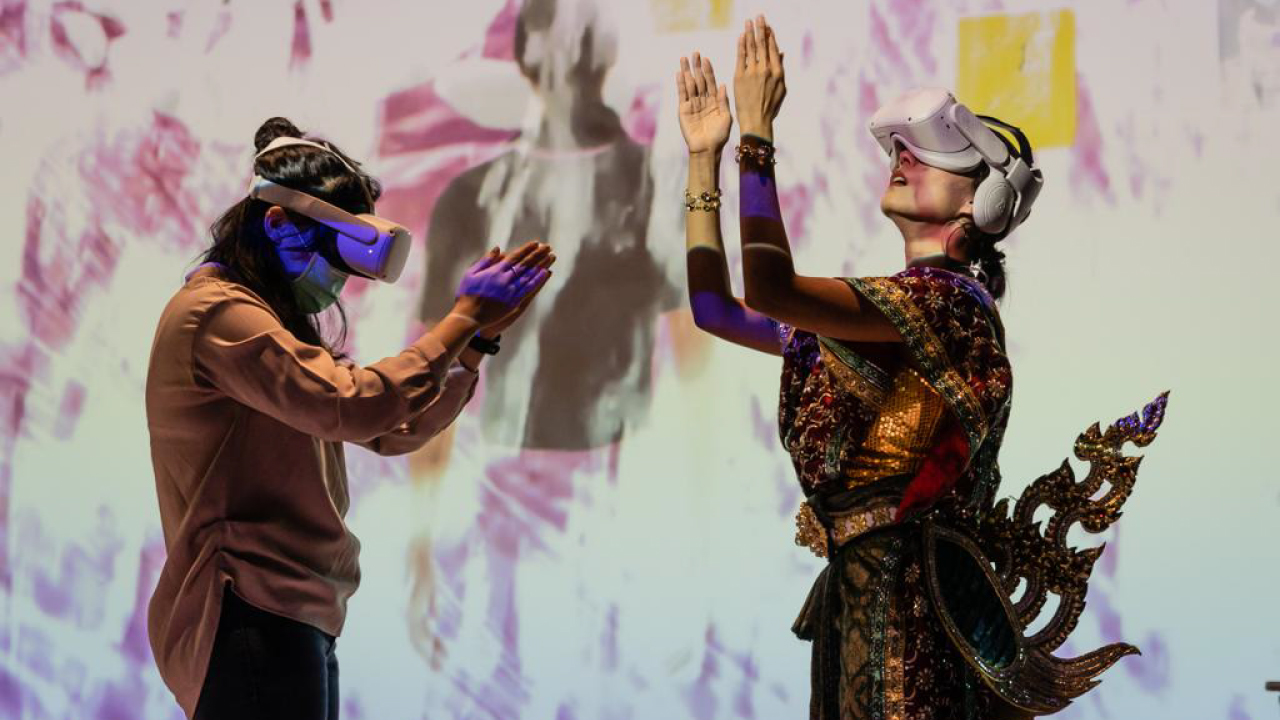
The creation of “Dance Offering” is inspired by the Thai traditional performance called Rum-Kea-Bon, a semi-ritual dance often carried out as a negotiation method. Through this dance, Kornkarn perceives the human not only as a subject who begs to a greater deity but as a being capable of exchange for getting their wishes granted.

By treating the body like an active archive, Sherli wants to re-narrate the tale tradition that has become a part of her. Her form is now an open door, allowing us to see and read Kerinci, not only as an actual physical site but also as an active cultural space that forms the identity of the people living within it.

Body exploration is highly important, acting as the basics of cultivating potential in the body, as a pre-dance class. This practice is synergized with movement exploration, to produce the ability to synchronise imagination and body capacity to illustrate ideas, may it be one or many.

In this workshop, Eyi Lesar will invite participants to play games such as the traditional childhood game, Gobak Sodor. Participants will explore integrating choreography, games and sports, while considering intentions and the impact on one's body's motor response within a space.

Departing from the regeneration process that is being carried out by IDF and several other art organizations in Indonesia in the last few years, the four speakers presented will provide readings and meanings of regeneration from their own experience.

This performance takes inspiration from a grain of rice, a traditional measurement unit in a shared agrarian heritage of Southeast Asia. It was this common measurement unit that made commerce in the region possible. However, measurements also serve other purposes beyond commerce.

By clashing artifacts and works, objects and performativity, conceptual and historical, Mella Jaarsma confronts us with situations that are out of the ordinary for the body and what we cover it with, presenting experiences that are between that of the real and the imaginary.

“Dance Dance Emoji” is a performance that is based on Tik Tok dance tutorials that use emojis to describe movement. At the same time, it reflects the use of social media in Philippine context.

Through the choreography work in "Pesona", Eka experiments with exchanging various perspectives and rereading the characteristic elements that also influence the visual sense of pictures taken of the Gong Dayak Kenyah dance.
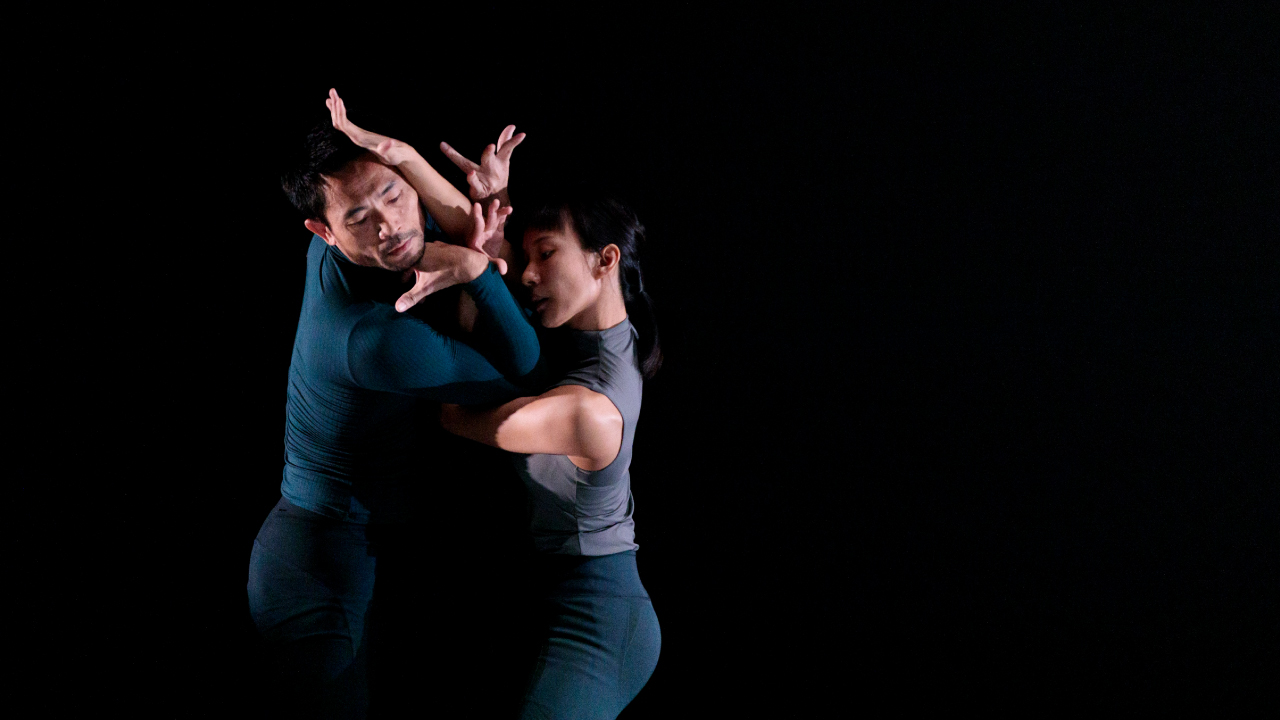
“No. 60” is a treatise on Pichet Klunchun’s research over two decades on the language of Thai traditional Khon dance. Stripping the classical form of its face-mask and sequined costume, Pichet scrutinizes the 59 poses and movements in the Theppanom canon which all Thai classical dancers acquire by rote-learning.
IDF 2022 concludes its festival programs with a deep gratitude and appreciation towards all involved practitioners – on stage and behind the scenes. The 16th edition of South East Asia’s longest-running festival marks the regeneration of the festival team, from IDF co-founders who have now taken the roles in the Steering Committee, to the young working team led by Ratri Anindyajati as Director.

This workshop offers insights into the design and management of dance platforms -both practically and conceptually- which IDF developed over 31 years as a starting point. In this workshop participants will be actively involved in mapping and analyzing various current art platforms, developing existing practices, and exploring the latest ideas.

Ghulur sees “SILO” as a space to explore the body within the constraints of physical space. “SILO” as a choreography and ritual is an endeavour to reach the emotional and spiritual peak with a limited physical position where one is grounded to the earth.

Looking at one's own context is critical to find strategies for working in the dance sector with a variety of choices. The three practitioners in the discussion come from three different contexts, perhaps intersecting with each other, but in continued process exploring best strategies when faced with diverse challenges.

This workshop offers insights into the design and management of dance platforms -both practically and conceptually- which IDF developed over 31 years as a starting point. In this workshop participants will be actively involved in mapping and analyzing various current art platforms, developing existing practices, and exploring the latest ideas.
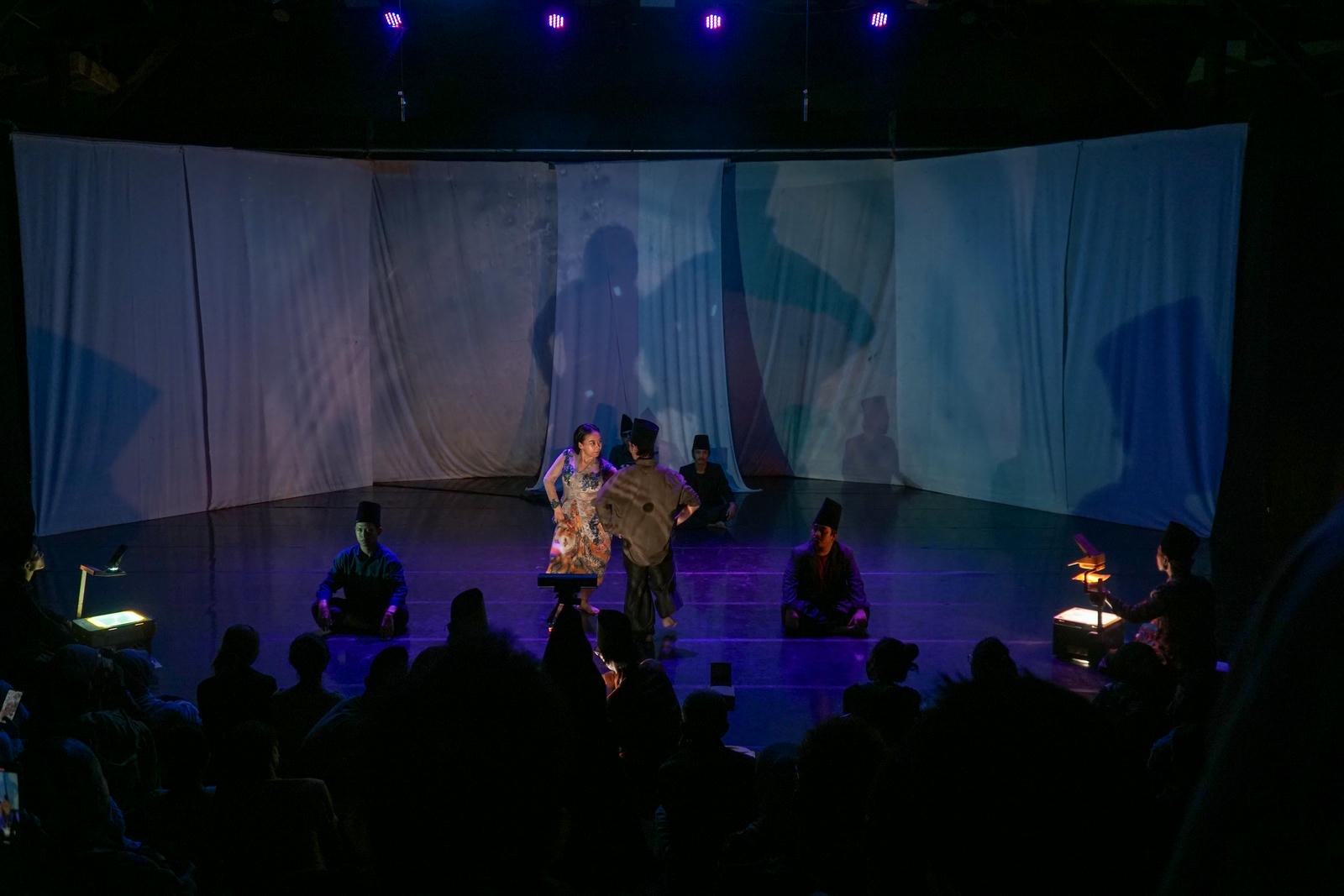
Atandâng is a dance piece that departs from Sri Cicik Handayani's exploration of the relationship between the penayub and the tandâ woman. Penayub is a male dancer and Tandâ is a female dancer in the Madurese Tayub traditional social dance.
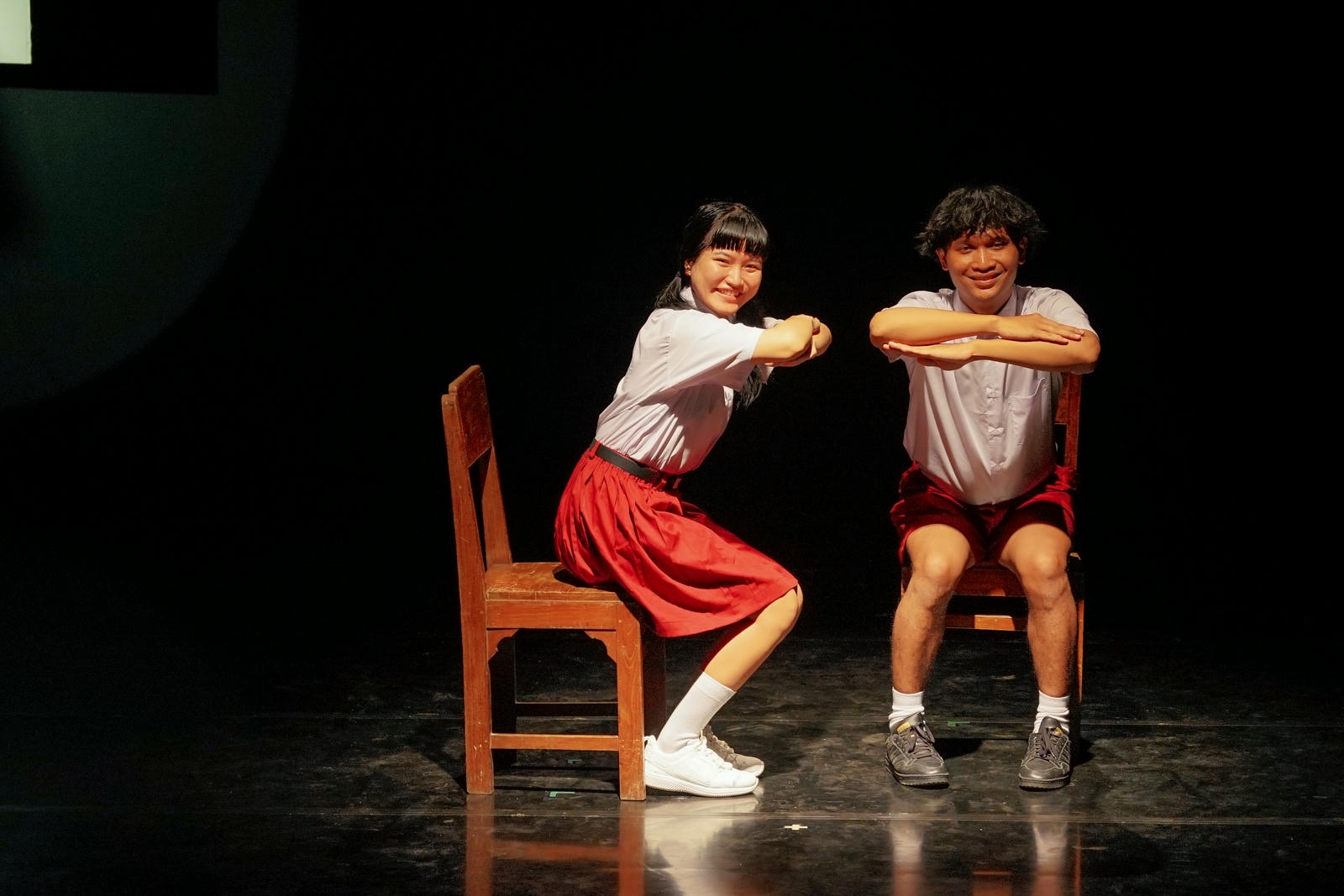
This work reflects various experiences lived by Megatruh and elementary school students in the 1980-2000s era in various regions of Indonesia. The name "Budi" is deeply embedded in the memories of students in that era because it is included in the Indonesian language lesson book "Ini Budi", distributed and used in schools throughout the country, and the name became a term that was created and standardised to describe the ‘good student’ model in the eyes of the teacher.
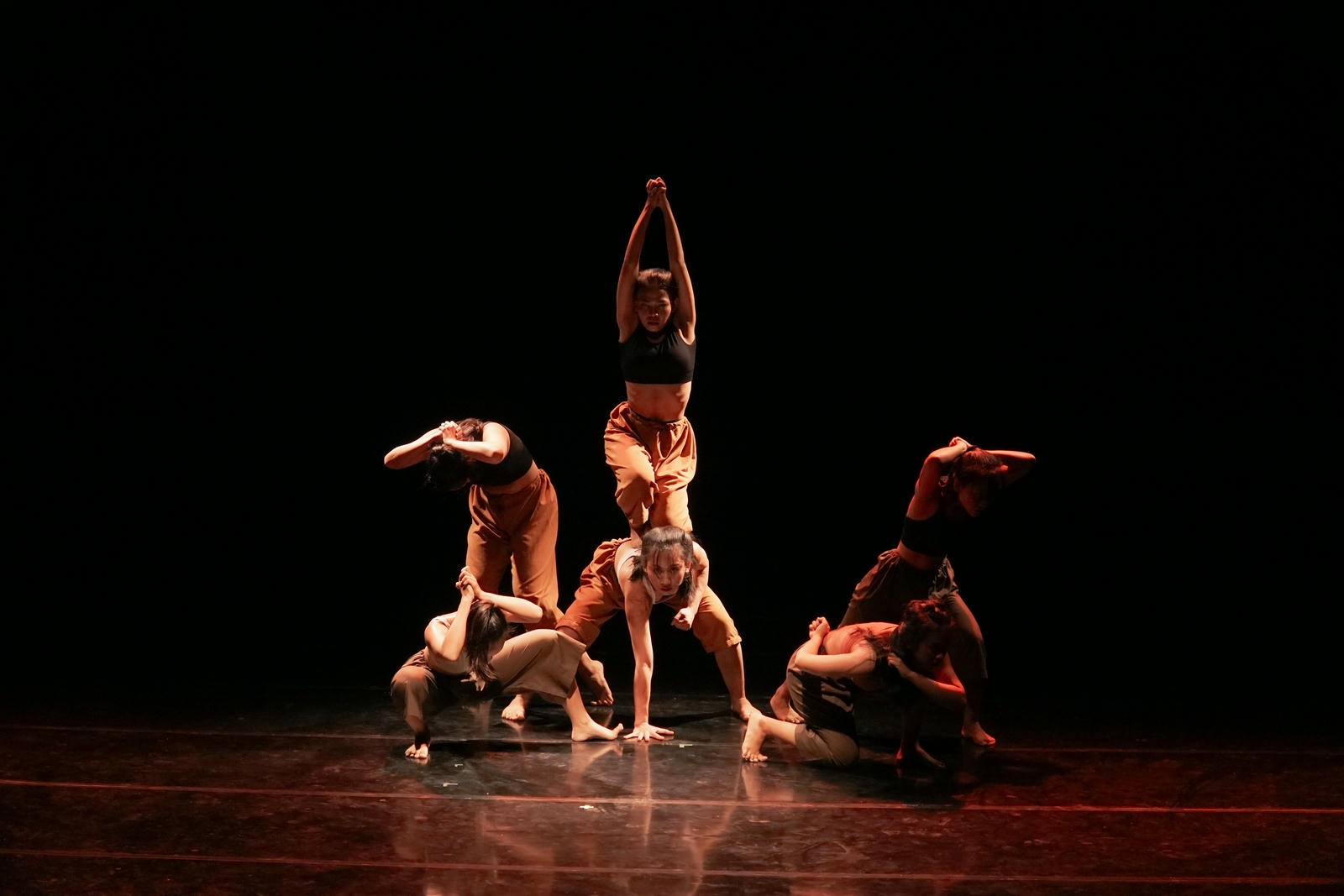
Ganda is a dance piece that depicts the emotional and physical journey of women ‘carrying’ labourers who work at the Beringharjo Market, Yogyakarta. This dance tells the story of their dual roles in an intriguing choreography, creating harmony between their graceful movements and the physical burdens they carry every day.
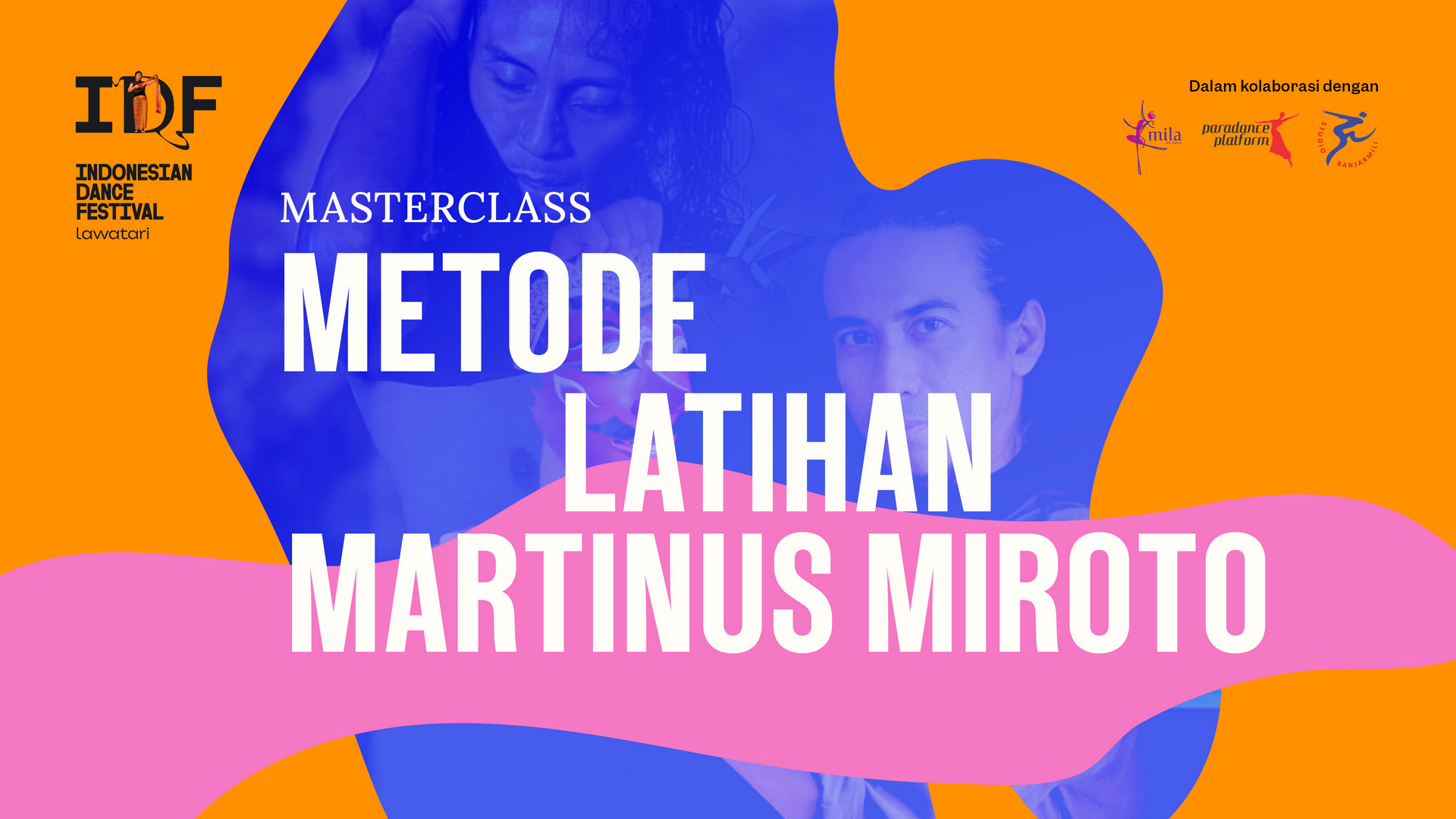
Looking briefly at the long history of Miroto's journey in the world of dance, indeed we can imagine that it cannot be disassociated with two aspects, training discipline and thought processes. He then applied both of them not only to himself, but to the dancers involved in his works.
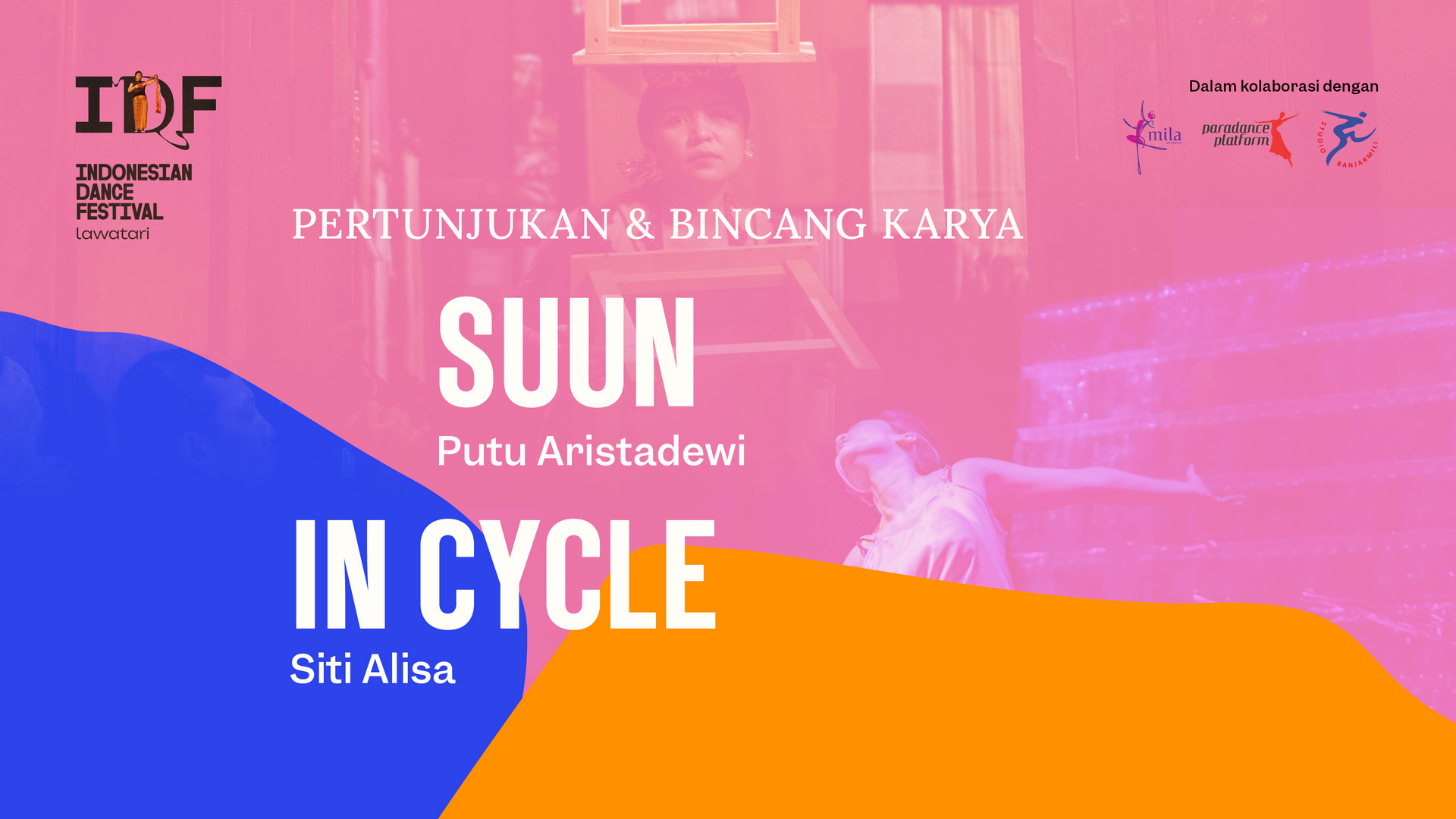
Suun departs from the discoveries obtained when observing the activity of suun as a daily practice of the body. Suun is a technique of carrying items by placing them on the head. When performing suun, there is a connection between the body, objects and space - how objects placed above the head affect the body's movement space.
This work speaks about women's cycles, about the phases of life that must be passed through in the modern era within the shadow of moral values that are passed down from generation to generation.
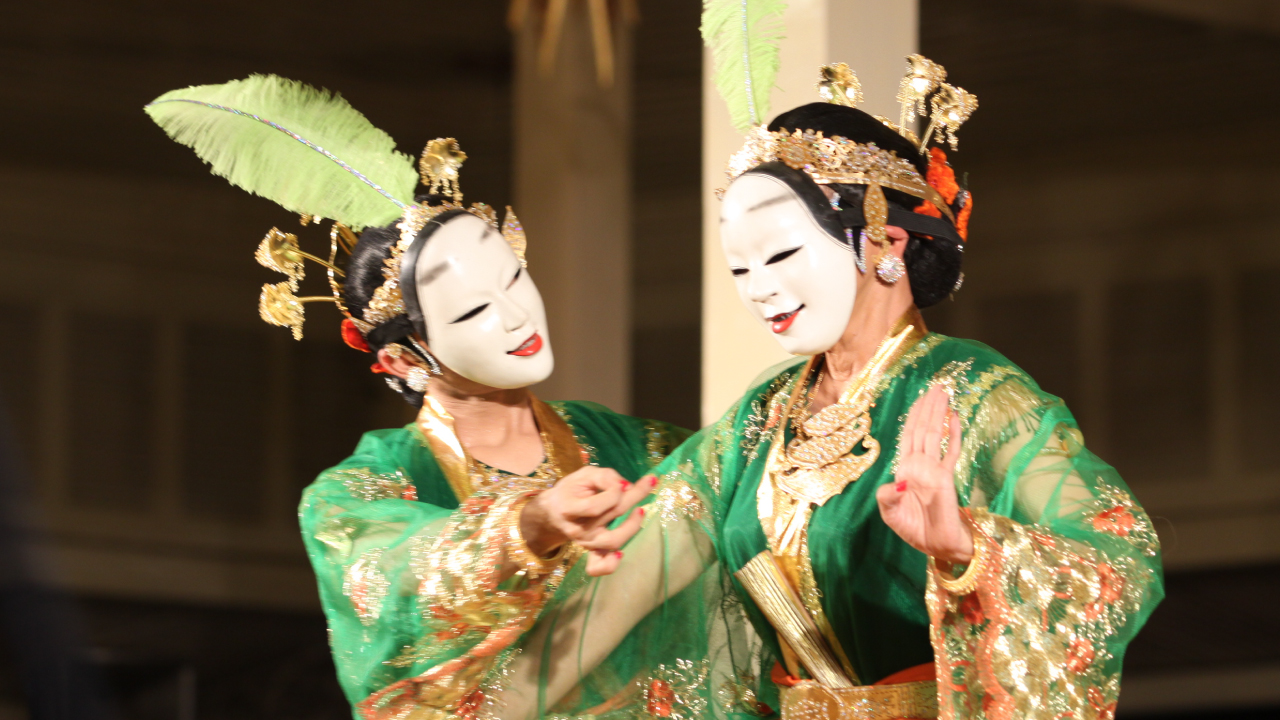
Bedhaya Hagoromo is a combination of two classical artforms: the Javanese Bedhaya dance and Japanese Noh dance-theatre. Formulation of the work was formed when Didik found a similar story in these two classical artforms, the story of Jaka Tarub.

In this workshop, we will use the style of Argentine tango as the main focus for exchange. In the dance style of Argentine tango, female dancers must center their weight on their male partners, who lead the spatial direction.

Dance maestro Didik Nini Thowok will share the basic body movements of Tari truno (Truno Dance), a folk tayub dance from Central Java created in 1983. The choreography of Tari Truno was created by Didik Nini Thowok for a film titled “Banteng Mataram: Ki Ageng Mangir” (1983)
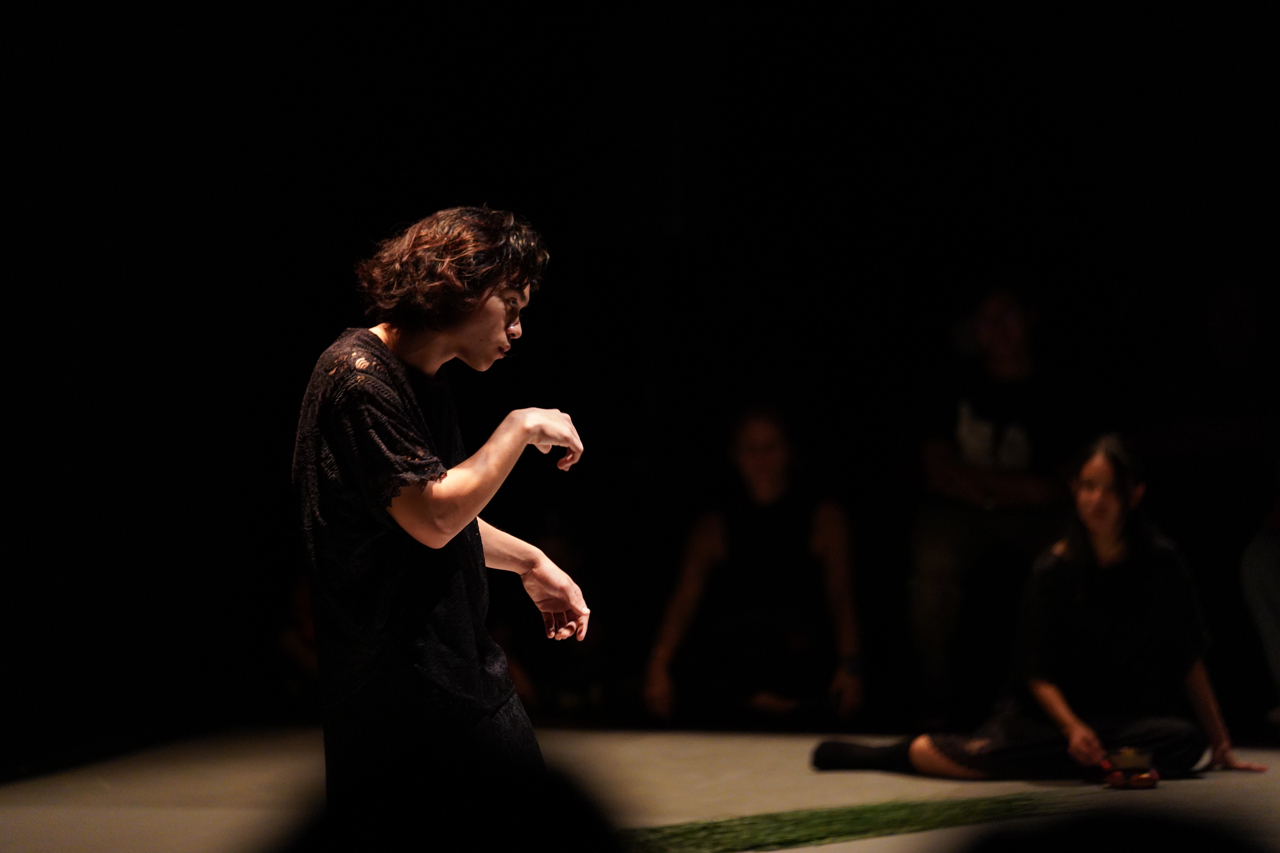
The title Ridden is translated as ‘ditunggangi’ in Indonesian and ‘憑依/Hyoui’ in Japanese. It is a word associated with spirits or ghosts–invisible but a felt present, when one returns from an unknown territory and their shoulders are ridden by a foreign energy/spirit.
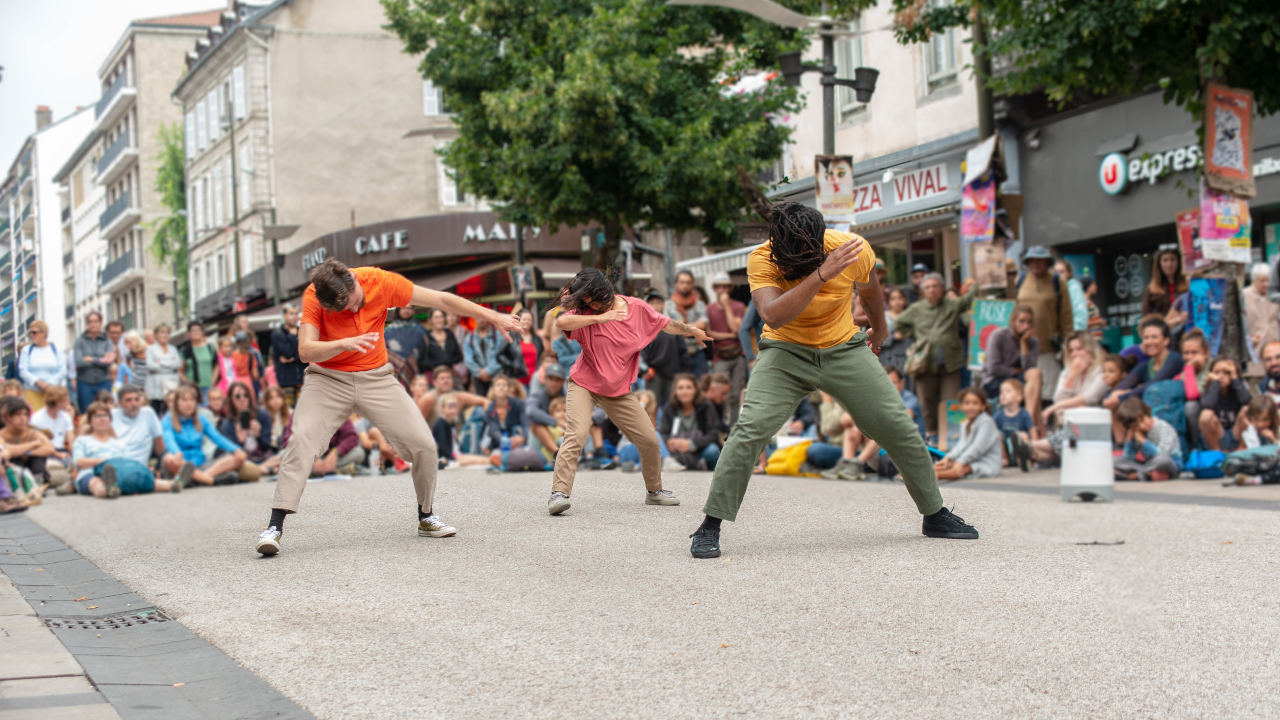
Created in 2020 in France, this 30-minute performance is designed to be performed in situ –recreated in each location by involving more local performances and showcasing their skills, within both hip-hop or contemporary movement vocabularies.

The workshop will introduce Marrugeku’s improvisational approaches to embodying social, cultural, personal and interspecies expression to develop new gestural dance and theatre.

In this masterclass, choreographer and dancer Leu Wijee, will share his newest discovery/movement research that he calls Powerstation/Arus. Participants are invited to understand how Leu Wijee organizes continuous movement-word-energy, work with scores, and the time-space continuum in the mind-body.
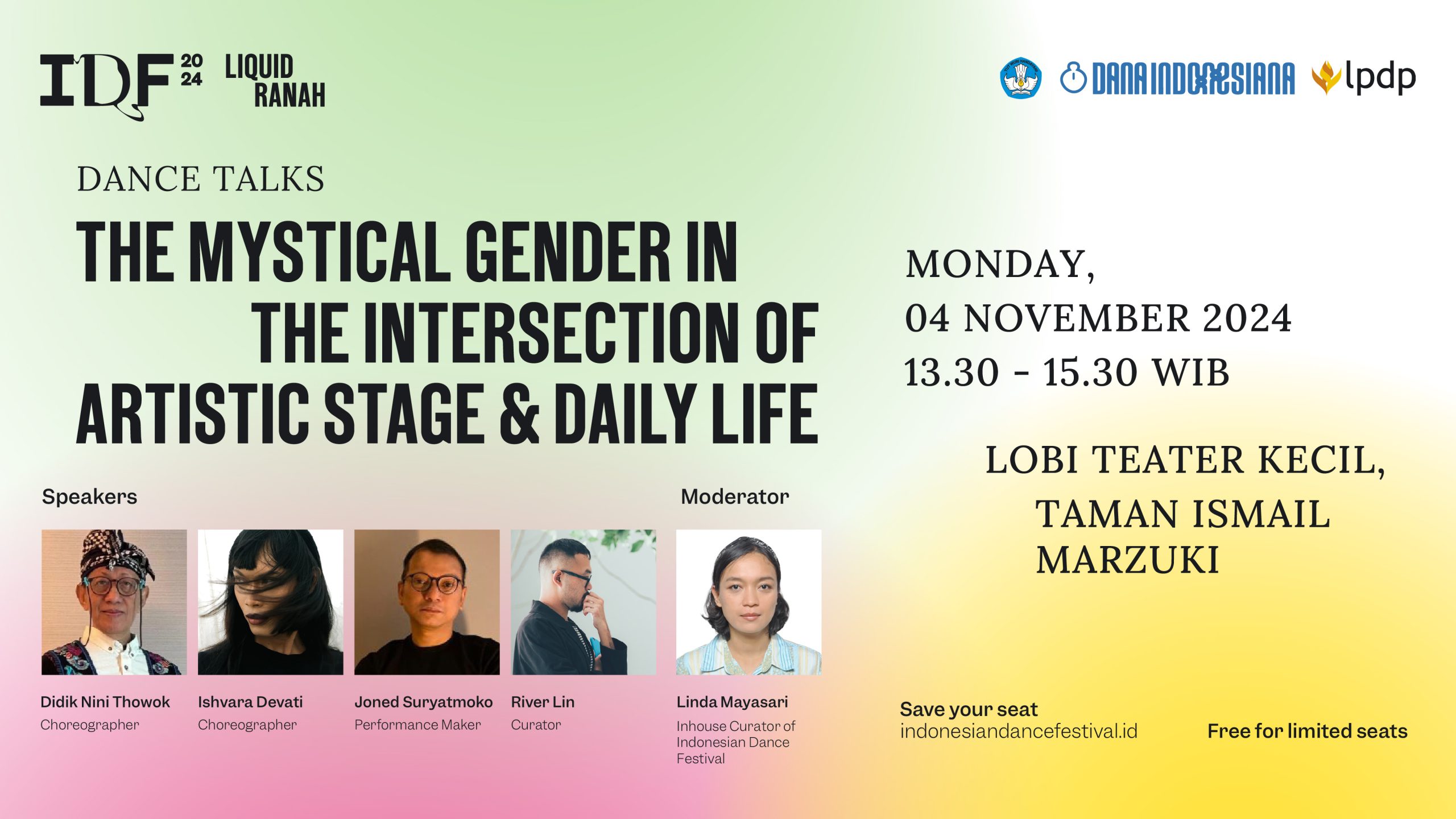
Dance works that display gender expressions outside the binary are often framed as forms of artistic expression related to issues of equality and human rights.

“The Singer” sutures theatre, vocal music, craft and movement. The work ruminates on the trans body as sanctuary of feminine predicament and queer remembrance, which, through stitch and song, metamorphose into the performer’s radical transfeminine storytelling premise: the woman who sews her pain is the same woman who sings her freedom.

In Iran, dancing has been officially prohibited since the start of the Islamic Revolution. All dance groups have been forced to cease their activities and many dancers and choreographers fled abroad. Those who remained have to be very resourceful in order to keep their art form alive.
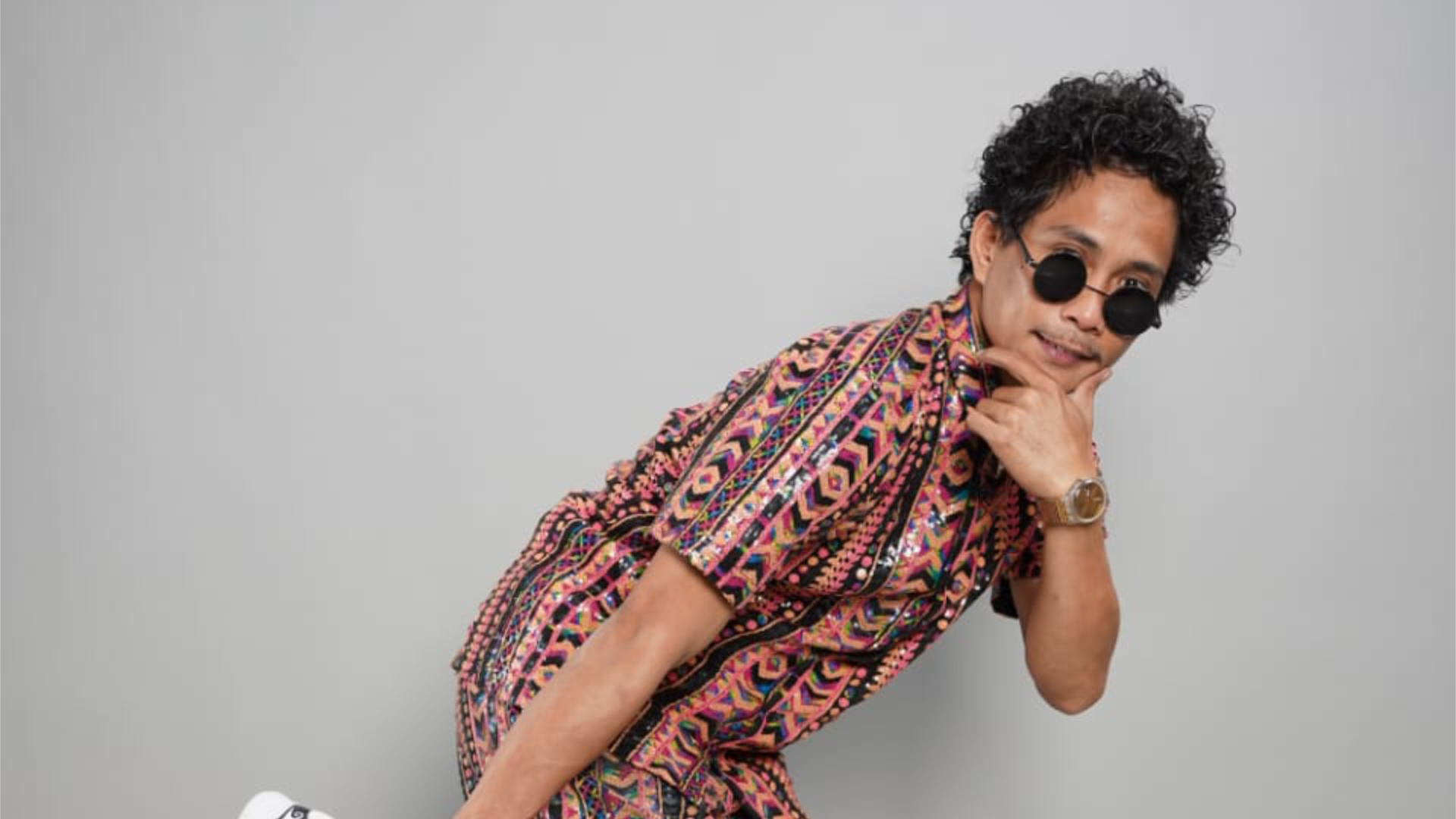
This workshop invites participants to learn a core principle of being a dancer: knowing your own body. Mastery of the body will make the anatomy of choreography more mature and ensure the body's readiness to receive various ideas, data, and intentions in the next stage of creating any work.
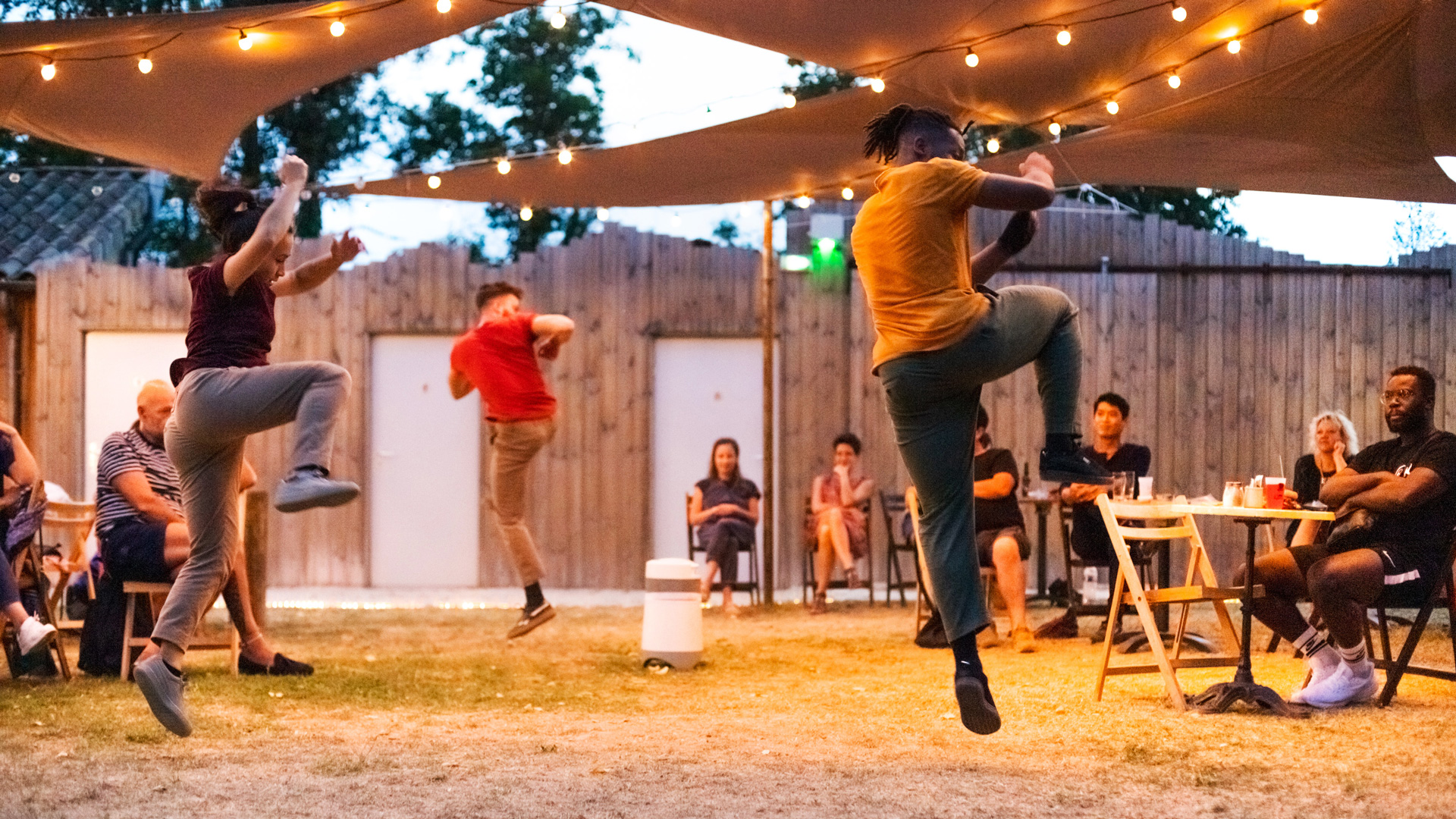
In this class, Olé will share his techniques, vocabulary, working methods and creative process to explore participants’ own artistic research. Olé will then transmit techniques and movements of the different techniques that forge his dance and on their marriage which singles out his vocabulary.
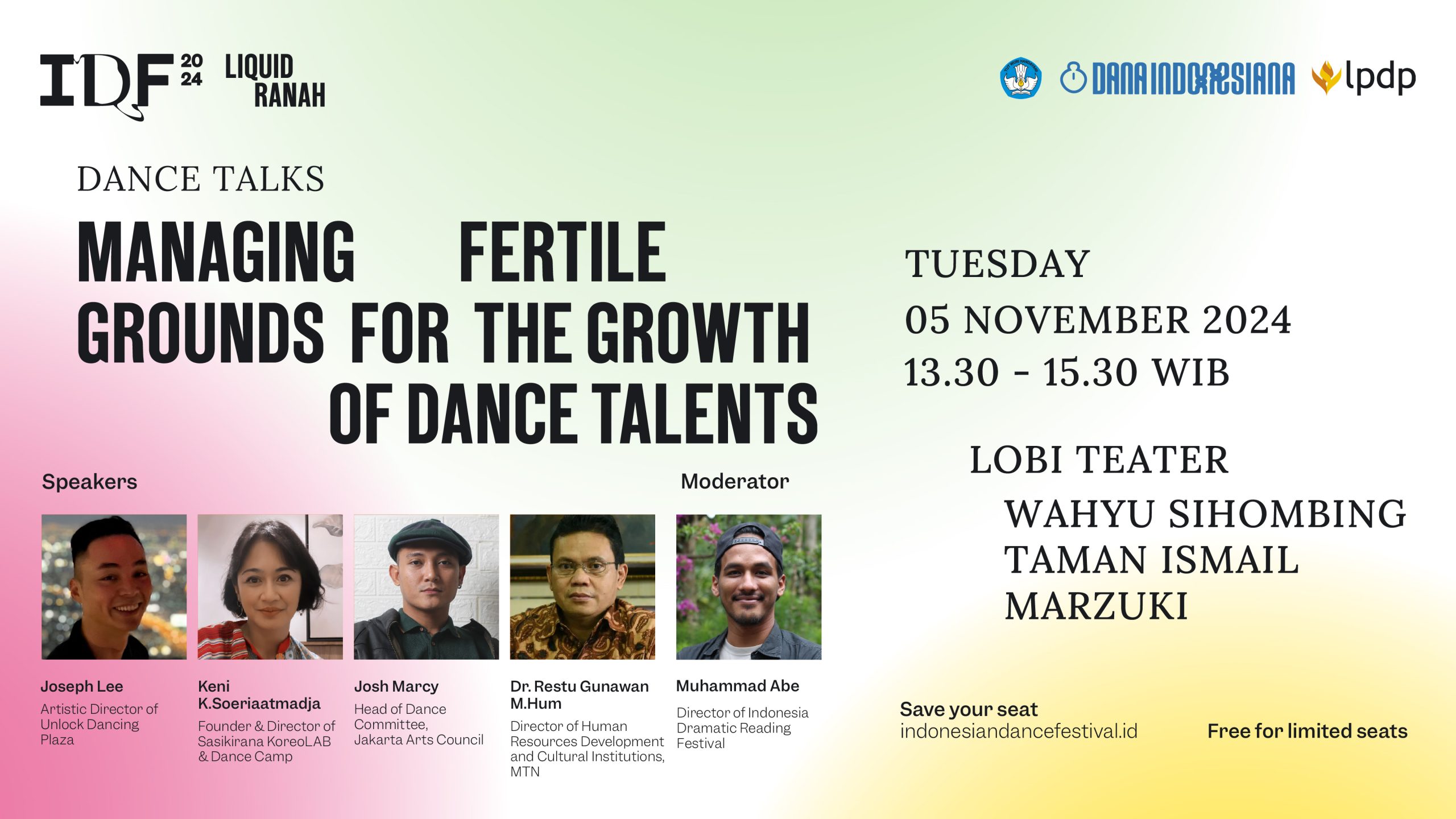
In the world of dance, the development of creativity requires fertile ground that allows for the growth and development of sustainable art.

Go In to Go Out is a performance development based on the artistic research platform “Membaca Sanghyang”, (“Reading Sanghyang”) done by Wayan Sumahardika through a collaboration between Mulawali Institute with Geriana Kauh-Karangasem and Kepaon-Denpasar cultural villages in Bali.
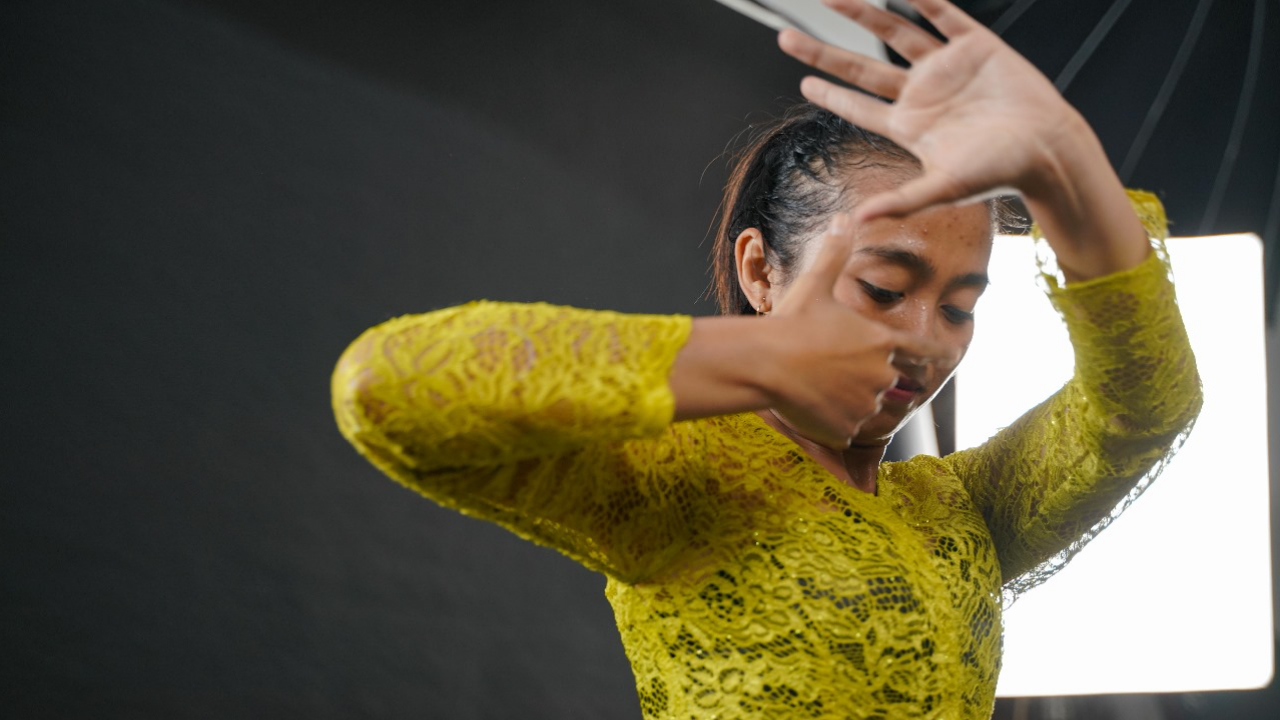
This work began with memories of Ela's childhood experiences as a spectator of Bajidoran art. This Sundanese folk performance becomes Ela’s entry point to see the shift in the position of the hips and womanhood generally considered a symbol of fertility.
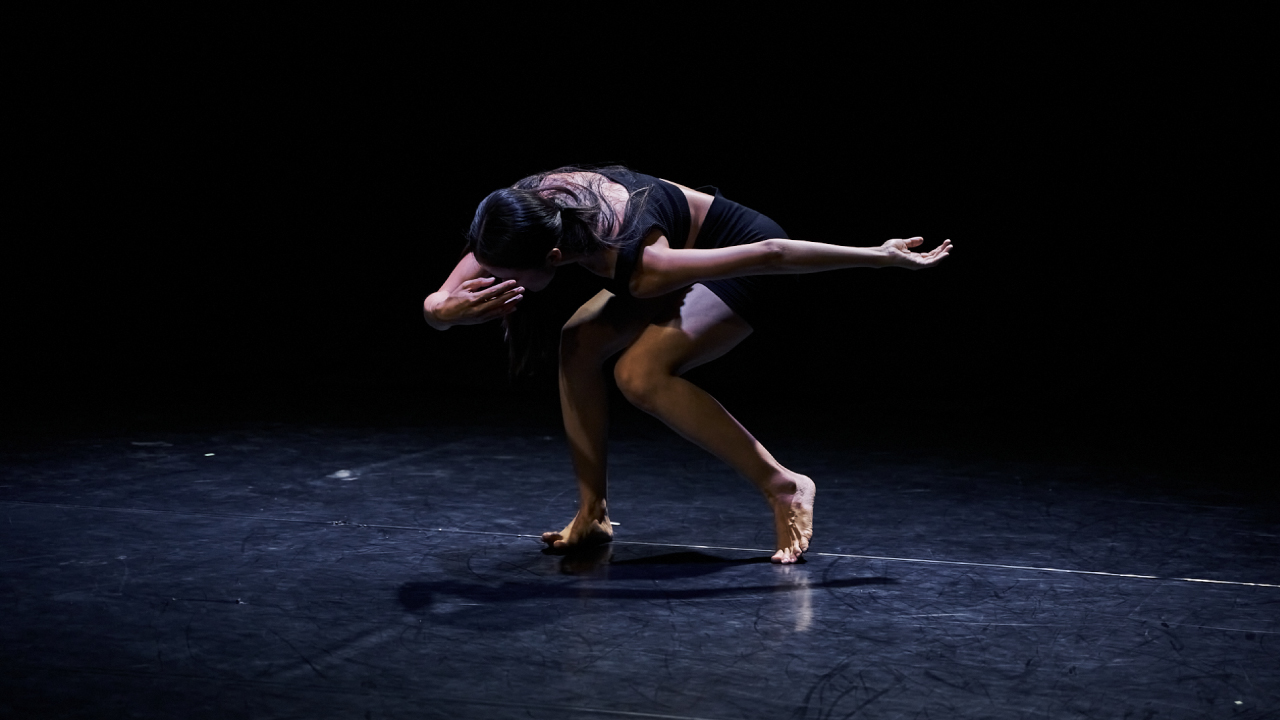
The trigger was an undeniable fact, that the weather changes faster than Nout can imagine. This realization came through discussions with friends, family, and artists from various disciplines.

Departing from Fitri's bodily experience on Mount Bromo (East Java) and Mount Padang (West Java), Garis Tegak Lurus is a dance body work that crosses spiritual practices at right angles to the baseline.
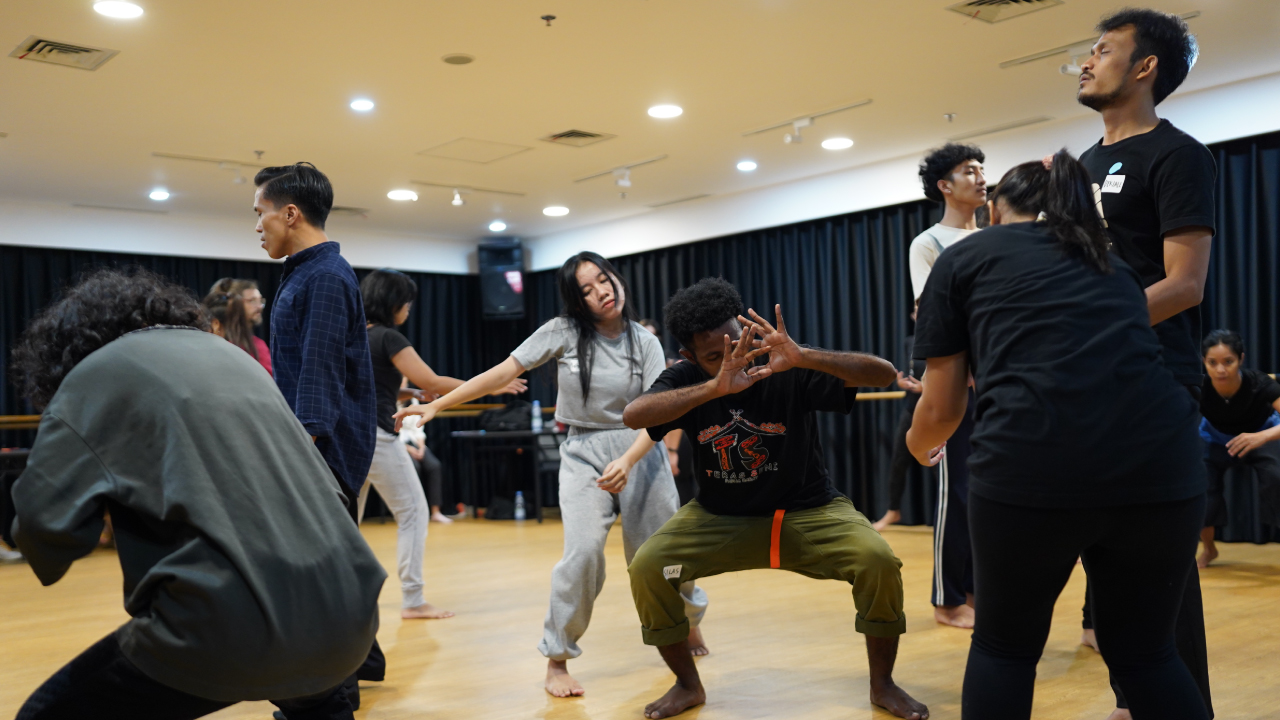
Created by Arco Renz, Spiral Gong is a movement practice that energizes and connects mind and body, allowing them to resonate and to move as one.
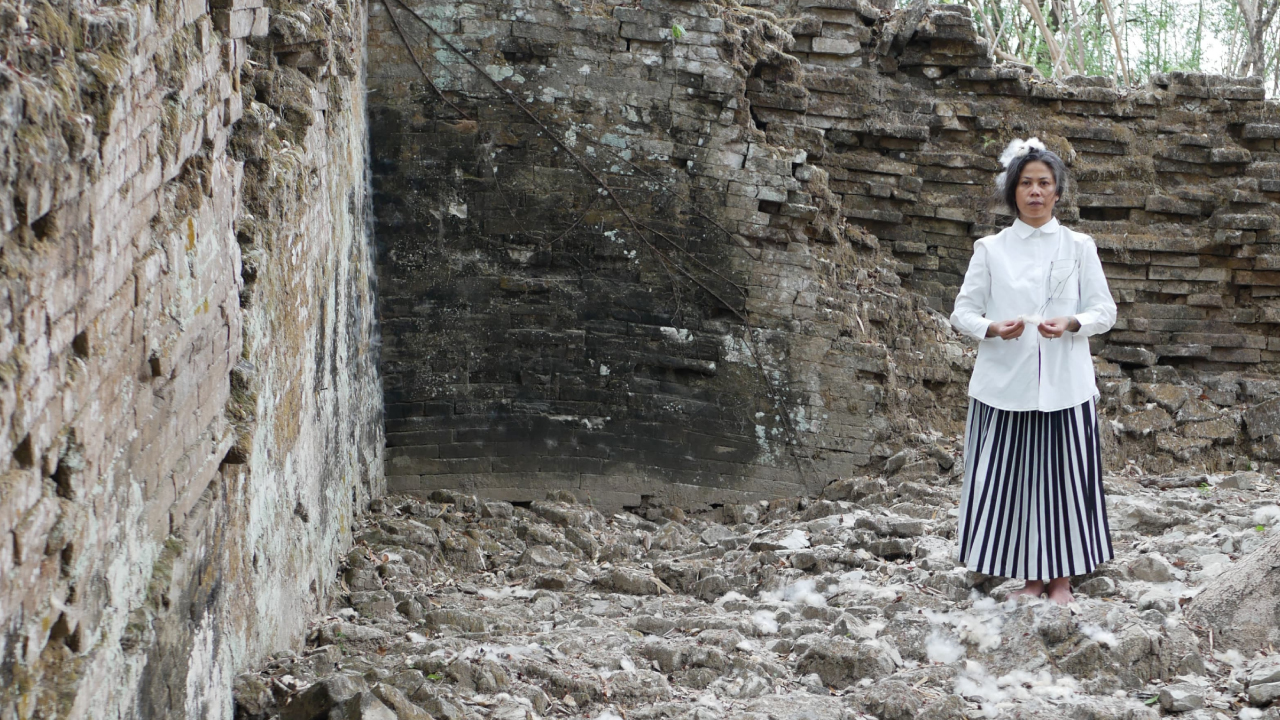
This workshop is a brief provocation from Fitri Setyaningsih through simple themes, presenting or bringing to life components according to their nature at the moment or when they occur. Fitri invites participants to converse their anxieties on an unlimited focus of the body, then spark a creational approach across media or disciplines.

This discussion will explore in depth how performing arts festivals play a vital role in promoting cultural, economic and social vitality.
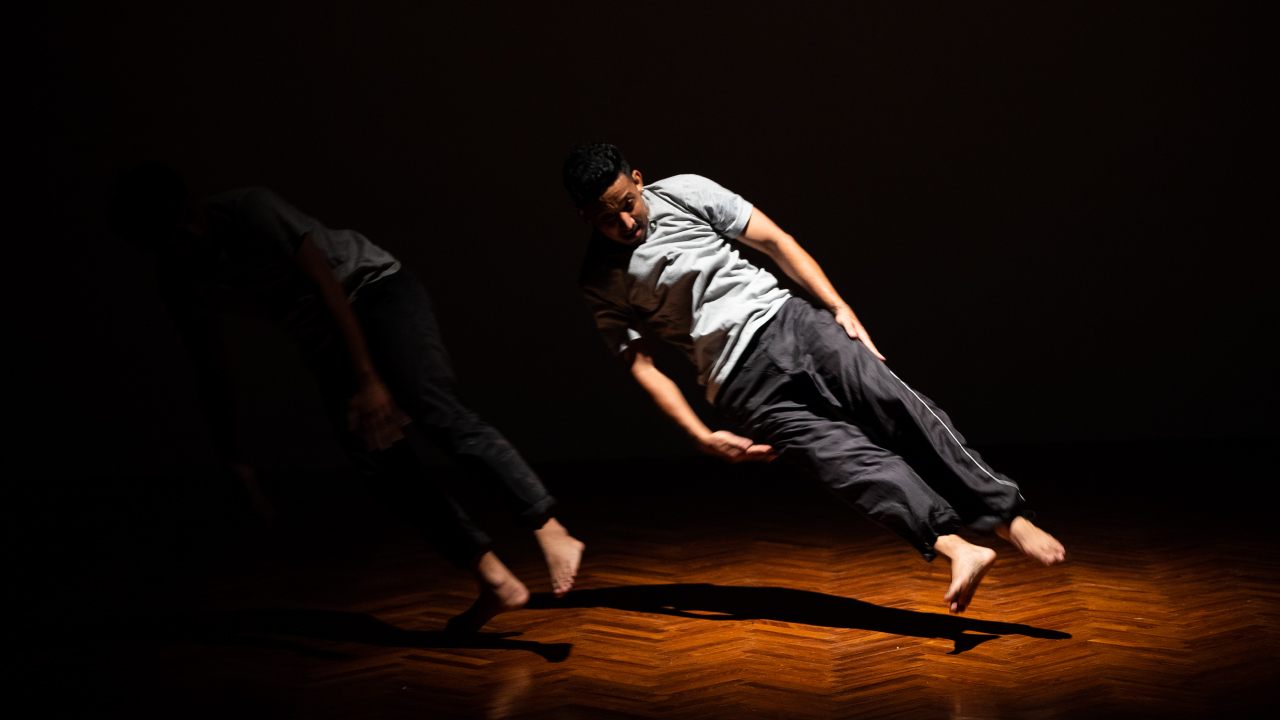
For Angga who grew up in Jakarta, the activity of wrapping rice in food stalls has become a core memory and a tie-in to talk about many things. To him, wrapped rice is very close as a metaphor for the urban living space and the middle- to lower-class people packed together and having to do anything in tight spaces to survive in it.
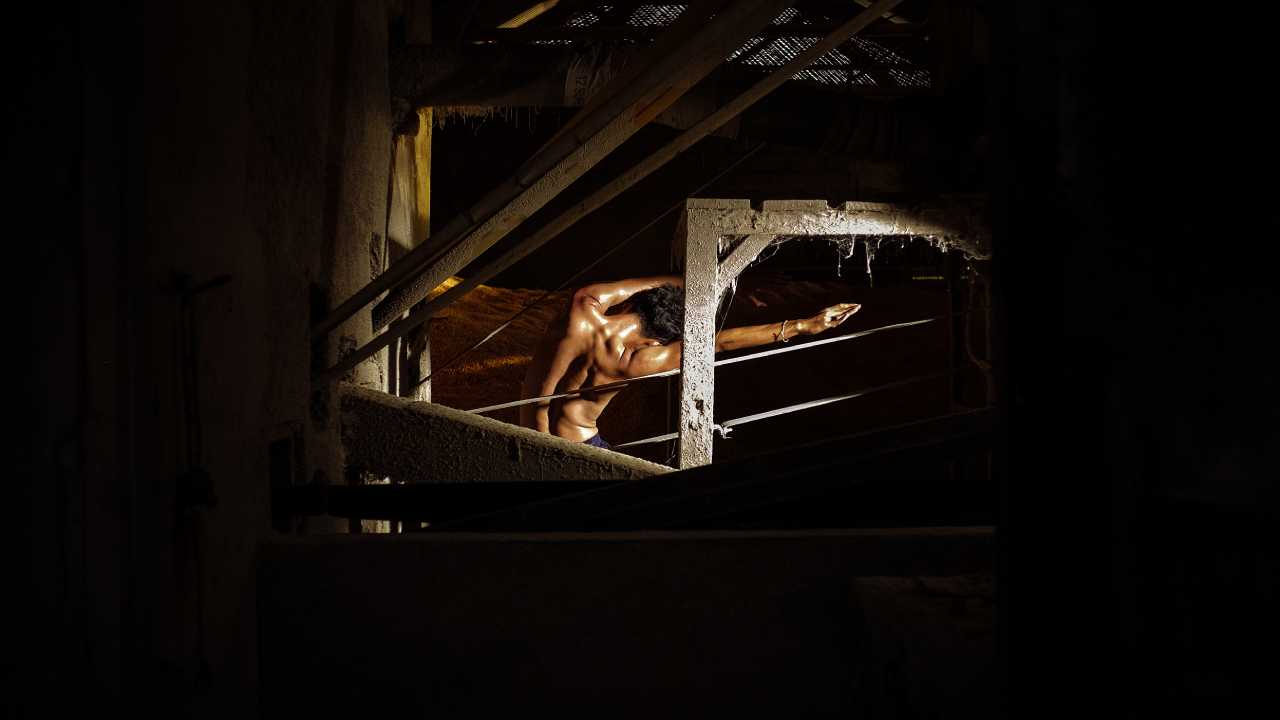
This work in development explores the transformation of the trans body through the process of Hormonal Replacement Therapy (HRT). Like nuclear fusion that combines atomic nuclei into a more powerful and complex entity, HRT unites organic biology and medical technology to create a new hybrid identity.
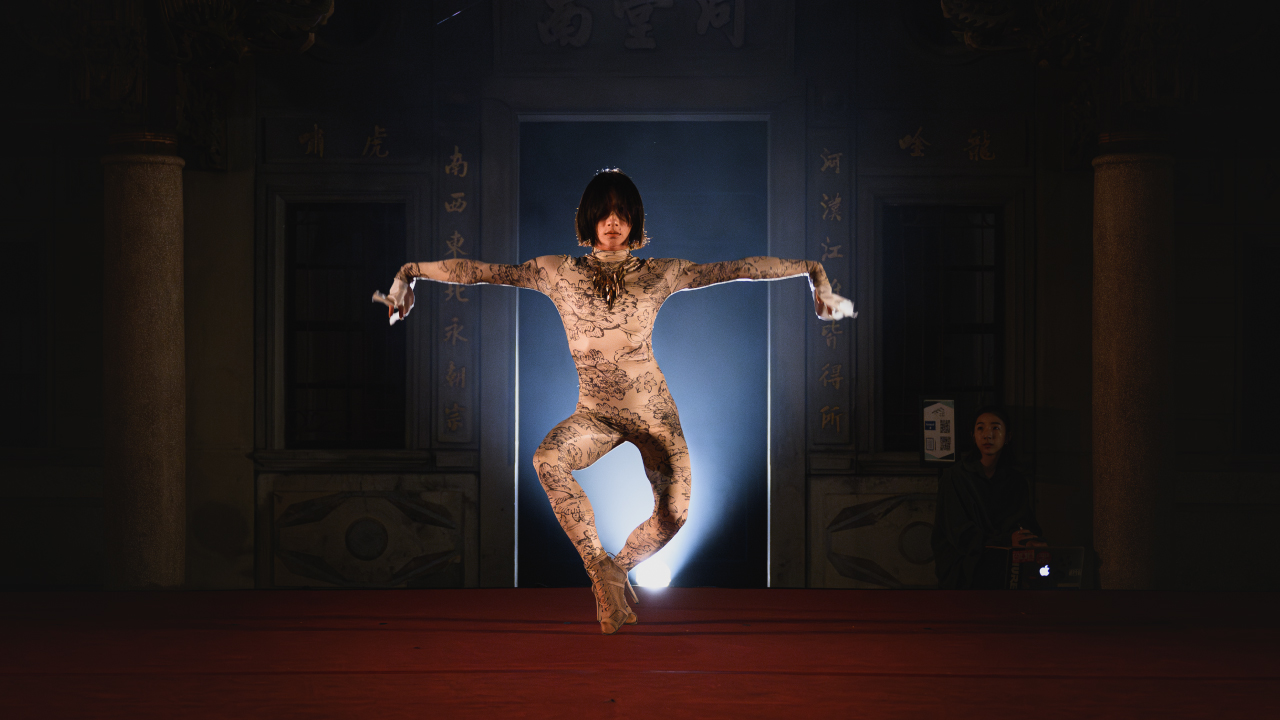
The dance piece Pan Xian contemplates the latent need for faith and deities in folk culture, while also highlighting the impact of current social movements in Taiwan. This work interlaces historical memories, issues of gender identities, traditional arts, and its ceremonial framework.
Workshops & Masterclasses
In this workshop, we will use the style of Argentine tango as the main focus for exchange. In the dance style of Argentine tango, female dancers must center their weight on their male partners, who lead the spatial direction.
Dance maestro Didik Nini Thowok will share the basic body movements of Tari truno (Truno Dance), a folk tayub dance from Central Java created in 1983. The choreography of Tari Truno was created by Didik Nini Thowok for a film titled “Banteng Mataram: Ki Ageng Mangir” (1983)
The workshop will introduce Marrugeku’s improvisational approaches to embodying social, cultural, personal and interspecies expression to develop new gestural dance and theatre.
In this masterclass, choreographer and dancer Leu Wijee, will share his newest discovery/movement research that he calls Powerstation/Arus. Participants are invited to understand how Leu Wijee organizes continuous movement-word-energy, work with scores, and the time-space continuum in the mind-body.
This workshop invites participants to learn a core principle of being a dancer: knowing your own body. Mastery of the body will make the anatomy of choreography more mature and ensure the body's readiness to receive various ideas, data, and intentions in the next stage of creating any work.
In this class, Olé will share his techniques, vocabulary, working methods and creative process to explore participants’ own artistic research. Olé will then transmit techniques and movements of the different techniques that forge his dance and on their marriage which singles out his vocabulary.
Created by Arco Renz, Spiral Gong is a movement practice that energizes and connects mind and body, allowing them to resonate and to move as one.
This workshop is a brief provocation from Fitri Setyaningsih through simple themes, presenting or bringing to life components according to their nature at the moment or when they occur. Fitri invites participants to converse their anxieties on an unlimited focus of the body, then spark a creational approach across media or disciplines.
Dance Talks
A prayer of gratitude and hope that never ends. The vibration of prayer that penetrates into the body is a mystery that will never be answered. The beginning and ending of prayer follow our journey. A simple prayer and a simple body, both will vibrate forever. Selapan is a result of a cross-disciplinary experimentation that places dance and ethnomathematics into a dialogue, responding to the Borobudur temple.
All-white, solid white yellowish to gray. Hard, medium and compact rocks. Lumps, shards, crumbles, brittleness, dissolves and precipitates. Paste and change appearance. The mechanical body becomes cosmic.
0-Excelsior is an offer to search for emptiness through exploration of sites in our surrounding area, which are visualized with sensual action interventions to uncover other realities in everyday spaces.
Dermaga Bincang Tari is a platform for critical choreography dialogs in the form of a virtual symposium. This program is intended to be a space for exchange of ideas for dance and interdisciplinary artists as well as researchers, local or international, whose practices relate to body discourse in the context of the dynamics of contemporary society today.
“I-Ruang” in ritual reality is a sacred place where ritual activities occur. The “I-Ruang” is attached to the body of a Wadian -a healer in the Dayak Ma'anyan tribal community in Central Kalimantan- which they carry with them when performing rituals at the house of the person they are healing.
“Paradox: The Nebulous (part 1)” departs from the idea of dream research and its relation to the conscious body and the unconscious body.
The title “in-” is inspired by the English prefix “in-” and the Japanese word "陰 (in) = darkness / shade / shadow". "陰 (in)" was feared and admired by the people, and was the source of imagination.
“Welcome” is part of 'Choreographing in the Cloud,' a series of studies that started in 2020 through an archive of collaborative workshops, lecture performances, and video projects created by Buboy Raquitico as an attempt to adapt to the limitations posed by the COVID-19 pandemic in pursuing artistic work virtually.
"MAYARI" departed from the artist’s experience during the pandemic and carried out self-isolation. Being cooped up in a room does not have to be boring, but it can be an opportunity to dive deep into exploring yourself.
An online public discussion for choreographers involved in Indonesian Dance Festival’s program, Layar Terkembang 2021 Virtual Bodies series. Five choreographers will share their artistic processes in relation to the curatorial theme, Virtual Bodies.
“Titik Koma Koma” emerged from an intentional interpretation of how the body is positioned in context to the process. Their current being is the result of studying past ignorance. In their journey, each step becomes a space that cannot be repeated nor revisited. This space turns into an abstraction and cannot be mapped.
What happens if a device becomes our external organ? “Cyborg” explores the dependent relationship between the body and technology. This dependency starts from the conscious process of downloading the program into the human body.
“Pigura” refers to a frame that is oriented towards limiting, protecting, distinguishing, and making an object special in a spatial context. In many cultures, the ”body”is framed within a special social frame. There is a paradoxical question from that reality: does the special frame protect, or does it cage the body?
Humans are social creatures, who only function when they coexist and interact with one another. But before reaching that stage, one has to mature and grow into adulthood.
The identity attached to an individual brings along behavioural requirements to follow social rules according to gender, religion, age, and others. However, what happens if identity is not attached to humans?
“Taulang” (meaning “repeated”) is a reading of a figure that has been verbally abused since childhood, in what should be the safest space - home. It often happens in the relationship between parents and children, but awareness is often absent within such a relationship.
I set a daily ritual of walking and dancing in my neighbourhood, as a way of mapping through bodies and movement. I try to find dance in this neighbourhood: what dance already exists here, who dances, where does it happen, what does dance mean, to them, in this place…
“Land Me” was inspired by a story of a woman who feels the memories of her past body and grows into another, one that has not been found in her sense of life.
“Dancing of Lament: Ibuku Menangis, Bumiku Meronta” starts from an anxiety about the fading relationship between human and mother nature.
The events your body goes through are connected to the imagination of a practice, to which the process of life takes place every moment so history can continue to reign in the mentality of life. How farmers lose their land to grow crops.
The traditional Tidung people in North Kalimantan believe in a traditional healing ritual known as besitan. This ritual is performed to cure the condition called selinat, which refers to a state in which a person loses control over himself.
When the universe offers the hero a new unknown path, be it a space or place, the first thing that appears within is fear, doubt, uncertainty and anxiety. The unknown is always scary. The hero begins to run away from responsibility, from circumstances, from reality, from his own fear, but it was not there.
Cherish your piece of heaven, cherish all you have, for all shall be gone when the time comes. Your love, your legacy, your life, have you truly lived it to the fullest?
An online public discussion for choreographers involved in Indonesian Dance Festival's program, Layar Terkembang 2022 Body and Rasa in Terra Incognita. Thirteen choreographers and 2 curators will share their artistic processes in relation to the curatorial theme.
Dermaga Bincang Tari is a critical choreography dialog platform that invites multidisciplinary artists and researchers that focus on body language, technology, and digital platforms, be it local or international.
Through reflection and research, IDF 2022 curatorial team reinterprets “rasa”, while exploring its conceptual footprints from different cultural experiences. This effort is intended to offer alternative perspectives on “rasa.” This dialogue opens up opportunities for the audience to peek into IDF’s curatorial behind-the-scenes alongside four speakers involved in the formulation of RASA: Beyond Bodies, the festival theme for 2022.
The spectres of choreography in the context of this archive exhibition has nothing to do with the astral concept where psychic phenomena take place. The spectres here, in contrast, is closely related to the history of materialism concept, where various cultural and artistic dance practices are formed. This exhibition archive is put together to mark and get to know the spectres of choreography that shadowed our past dance practices, ones that we inherit today.
IDF 2022 Opening Night is an opportunity to celebrate the 30th anniversary of the festival. Within 7 days, the festival will host 7 evening performances, 6 Kampana performances, 8 workshops, 4 Dance Talks, Vasana Tari archive exhibition, and Lokapasar – a retail area for Indonesian products and IDF limited edition merchandise in collaboration with local communities.
The work “SILO” explores the Islamic custom of tahlil (the act of repeatedly reciting the sentence “la ilaha illa Allah”, which means “there is no other god worthy of worshiping, other than Allah” as a prayer ritual), in this context seen as the central motoric movement around the torso. The work is a vertical dialogue method between him and the Holy One through repetitive and personal movements.
Instead of considering limitations as a constraint, it can actually be seen as guidelines for achieving freedom. This method of limitation is a space for body construction that Hari Ghurur works on to explore new possibilities of repetitive motion, so that organic and expressive motion emerges.
Imagination enables humans to create or transform something ordinary into the extraordinary, even when its form is still a fleeting thought in mind. This workshop hopes to be a space to spark participants’ creativity in using the body, things, and spaces around them.
The important thing to note from IDF's curatorial practice is the collaborative approach that involves several people. This allows IDF's artistic vision to be built and realized through various perspectives. In 2022, IDF will work with six curators across generations and countries to develop and reiterate the theme RASA: Beyond Bodies into all the elements of the festival.
Reality has always been augmented—by the limits of our human perception. “Sky Blue Mythic” sees the body alienated, and the alien embodied. Worlds loom, times loop, gestures distill and meanings distort.
Working with the body and voice, Angela Goh invites participants to explore the mechanisms of choreographic construction.
"Paradox" departs from the artist’s research about dream and its relation to the body. How the conscience and the unconsciousness take over the body in turn, like two separate entities that create a whole being.
“Body Tarekat” is a solo performance that both builds on and departs from physical practices while doing “tarekat”, specifically the Qadriyah tarekat* from Aceh. Tarekat, in general context, is a method or path to get closer to The Almighty by praising his name. For the choreographer, tarekat is life, a way to perceive life and existence itself.
The game Gobak Sodor and Bentengan is a collective childhood memory. Not only does it recall fun memories, this game also activates a crucial bodily process.
This Masterclass introduces the core principles of Taiji Quan and their creative application in the performing arts. We will practice a set of physical principles relating to breathing patterns and the merging of opposing poles such as in-out, open-close, gather-disperse.
In the body, muscles are the main connective tissue that regulates all our activities. In this class, participants are invited to increase muscle awareness which is crucial in carrying out the multiple functions of the body.
In this conversation, the speaker will exchange their experiences of the art laboratory practice before reflecting on the dynamics of the arts and social fields encountered in Indonesia, regional and international.
“Senam Kota Kita” is a calisthenics/dance performance specially designed for the capital citizens at IDF 2022. Gymnastik Emporium offers a different perspective, seeing calisthenics not just as a physical sport, but also its aesthetic sense.
“No. 60” is not a choreographic pose or movement but it is a “principle of the dance practice” that consists of the combination of six elements. Participants will learn about the six elements and how to adapt them in order to find their own dance identities.
“Museum II: Ridden” is a reflection/performance that presents a vocabulary of motion centered on the exploration of mutation and the sense of alertness in the body. The exploration presents bodies that have experienced disasters: the three dancers on stage are ridden with rhythmic movements, filled with fragrance and mantra.
The creation of “Dance Offering” is inspired by the Thai traditional performance called Rum-Kea-Bon, a semi-ritual dance often carried out as a negotiation method. Through this dance, Kornkarn perceives the human not only as a subject who begs to a greater deity but as a being capable of exchange for getting their wishes granted.
By treating the body like an active archive, Sherli wants to re-narrate the tale tradition that has become a part of her. Her form is now an open door, allowing us to see and read Kerinci, not only as an actual physical site but also as an active cultural space that forms the identity of the people living within it.
Body exploration is highly important, acting as the basics of cultivating potential in the body, as a pre-dance class. This practice is synergized with movement exploration, to produce the ability to synchronise imagination and body capacity to illustrate ideas, may it be one or many.
In this workshop, Eyi Lesar will invite participants to play games such as the traditional childhood game, Gobak Sodor. Participants will explore integrating choreography, games and sports, while considering intentions and the impact on one's body's motor response within a space.
Departing from the regeneration process that is being carried out by IDF and several other art organizations in Indonesia in the last few years, the four speakers presented will provide readings and meanings of regeneration from their own experience.
This performance takes inspiration from a grain of rice, a traditional measurement unit in a shared agrarian heritage of Southeast Asia. It was this common measurement unit that made commerce in the region possible. However, measurements also serve other purposes beyond commerce.
By clashing artifacts and works, objects and performativity, conceptual and historical, Mella Jaarsma confronts us with situations that are out of the ordinary for the body and what we cover it with, presenting experiences that are between that of the real and the imaginary.
“Dance Dance Emoji” is a performance that is based on Tik Tok dance tutorials that use emojis to describe movement. At the same time, it reflects the use of social media in Philippine context.
Through the choreography work in "Pesona", Eka experiments with exchanging various perspectives and rereading the characteristic elements that also influence the visual sense of pictures taken of the Gong Dayak Kenyah dance.
“No. 60” is a treatise on Pichet Klunchun’s research over two decades on the language of Thai traditional Khon dance. Stripping the classical form of its face-mask and sequined costume, Pichet scrutinizes the 59 poses and movements in the Theppanom canon which all Thai classical dancers acquire by rote-learning.
IDF 2022 concludes its festival programs with a deep gratitude and appreciation towards all involved practitioners – on stage and behind the scenes. The 16th edition of South East Asia’s longest-running festival marks the regeneration of the festival team, from IDF co-founders who have now taken the roles in the Steering Committee, to the young working team led by Ratri Anindyajati as Director.
This workshop offers insights into the design and management of dance platforms -both practically and conceptually- which IDF developed over 31 years as a starting point. In this workshop participants will be actively involved in mapping and analyzing various current art platforms, developing existing practices, and exploring the latest ideas.
Ghulur sees “SILO” as a space to explore the body within the constraints of physical space. “SILO” as a choreography and ritual is an endeavour to reach the emotional and spiritual peak with a limited physical position where one is grounded to the earth.
Looking at one's own context is critical to find strategies for working in the dance sector with a variety of choices. The three practitioners in the discussion come from three different contexts, perhaps intersecting with each other, but in continued process exploring best strategies when faced with diverse challenges.
This workshop offers insights into the design and management of dance platforms -both practically and conceptually- which IDF developed over 31 years as a starting point. In this workshop participants will be actively involved in mapping and analyzing various current art platforms, developing existing practices, and exploring the latest ideas.
Atandâng is a dance piece that departs from Sri Cicik Handayani's exploration of the relationship between the penayub and the tandâ woman. Penayub is a male dancer and Tandâ is a female dancer in the Madurese Tayub traditional social dance.
This work reflects various experiences lived by Megatruh and elementary school students in the 1980-2000s era in various regions of Indonesia. The name "Budi" is deeply embedded in the memories of students in that era because it is included in the Indonesian language lesson book "Ini Budi", distributed and used in schools throughout the country, and the name became a term that was created and standardised to describe the ‘good student’ model in the eyes of the teacher.
Ganda is a dance piece that depicts the emotional and physical journey of women ‘carrying’ labourers who work at the Beringharjo Market, Yogyakarta. This dance tells the story of their dual roles in an intriguing choreography, creating harmony between their graceful movements and the physical burdens they carry every day.
Looking briefly at the long history of Miroto's journey in the world of dance, indeed we can imagine that it cannot be disassociated with two aspects, training discipline and thought processes. He then applied both of them not only to himself, but to the dancers involved in his works.
Suun departs from the discoveries obtained when observing the activity of suun as a daily practice of the body. Suun is a technique of carrying items by placing them on the head. When performing suun, there is a connection between the body, objects and space - how objects placed above the head affect the body's movement space.
This work speaks about women's cycles, about the phases of life that must be passed through in the modern era within the shadow of moral values that are passed down from generation to generation.
Bedhaya Hagoromo is a combination of two classical artforms: the Javanese Bedhaya dance and Japanese Noh dance-theatre. Formulation of the work was formed when Didik found a similar story in these two classical artforms, the story of Jaka Tarub.
In this workshop, we will use the style of Argentine tango as the main focus for exchange. In the dance style of Argentine tango, female dancers must center their weight on their male partners, who lead the spatial direction.
Dance maestro Didik Nini Thowok will share the basic body movements of Tari truno (Truno Dance), a folk tayub dance from Central Java created in 1983. The choreography of Tari Truno was created by Didik Nini Thowok for a film titled “Banteng Mataram: Ki Ageng Mangir” (1983)
The title Ridden is translated as ‘ditunggangi’ in Indonesian and ‘憑依/Hyoui’ in Japanese. It is a word associated with spirits or ghosts–invisible but a felt present, when one returns from an unknown territory and their shoulders are ridden by a foreign energy/spirit.
Created in 2020 in France, this 30-minute performance is designed to be performed in situ –recreated in each location by involving more local performances and showcasing their skills, within both hip-hop or contemporary movement vocabularies.
The workshop will introduce Marrugeku’s improvisational approaches to embodying social, cultural, personal and interspecies expression to develop new gestural dance and theatre.
In this masterclass, choreographer and dancer Leu Wijee, will share his newest discovery/movement research that he calls Powerstation/Arus. Participants are invited to understand how Leu Wijee organizes continuous movement-word-energy, work with scores, and the time-space continuum in the mind-body.
Dance works that display gender expressions outside the binary are often framed as forms of artistic expression related to issues of equality and human rights.
“The Singer” sutures theatre, vocal music, craft and movement. The work ruminates on the trans body as sanctuary of feminine predicament and queer remembrance, which, through stitch and song, metamorphose into the performer’s radical transfeminine storytelling premise: the woman who sews her pain is the same woman who sings her freedom.
In Iran, dancing has been officially prohibited since the start of the Islamic Revolution. All dance groups have been forced to cease their activities and many dancers and choreographers fled abroad. Those who remained have to be very resourceful in order to keep their art form alive.
This workshop invites participants to learn a core principle of being a dancer: knowing your own body. Mastery of the body will make the anatomy of choreography more mature and ensure the body's readiness to receive various ideas, data, and intentions in the next stage of creating any work.
In this class, Olé will share his techniques, vocabulary, working methods and creative process to explore participants’ own artistic research. Olé will then transmit techniques and movements of the different techniques that forge his dance and on their marriage which singles out his vocabulary.
In the world of dance, the development of creativity requires fertile ground that allows for the growth and development of sustainable art.
Go In to Go Out is a performance development based on the artistic research platform “Membaca Sanghyang”, (“Reading Sanghyang”) done by Wayan Sumahardika through a collaboration between Mulawali Institute with Geriana Kauh-Karangasem and Kepaon-Denpasar cultural villages in Bali.
This work began with memories of Ela's childhood experiences as a spectator of Bajidoran art. This Sundanese folk performance becomes Ela’s entry point to see the shift in the position of the hips and womanhood generally considered a symbol of fertility.
The trigger was an undeniable fact, that the weather changes faster than Nout can imagine. This realization came through discussions with friends, family, and artists from various disciplines.
Departing from Fitri's bodily experience on Mount Bromo (East Java) and Mount Padang (West Java), Garis Tegak Lurus is a dance body work that crosses spiritual practices at right angles to the baseline.
Created by Arco Renz, Spiral Gong is a movement practice that energizes and connects mind and body, allowing them to resonate and to move as one.
This workshop is a brief provocation from Fitri Setyaningsih through simple themes, presenting or bringing to life components according to their nature at the moment or when they occur. Fitri invites participants to converse their anxieties on an unlimited focus of the body, then spark a creational approach across media or disciplines.
This discussion will explore in depth how performing arts festivals play a vital role in promoting cultural, economic and social vitality.
For Angga who grew up in Jakarta, the activity of wrapping rice in food stalls has become a core memory and a tie-in to talk about many things. To him, wrapped rice is very close as a metaphor for the urban living space and the middle- to lower-class people packed together and having to do anything in tight spaces to survive in it.
This work in development explores the transformation of the trans body through the process of Hormonal Replacement Therapy (HRT). Like nuclear fusion that combines atomic nuclei into a more powerful and complex entity, HRT unites organic biology and medical technology to create a new hybrid identity.
The dance piece Pan Xian contemplates the latent need for faith and deities in folk culture, while also highlighting the impact of current social movements in Taiwan. This work interlaces historical memories, issues of gender identities, traditional arts, and its ceremonial framework.
Road to IDF 2024
oleh:
Linda Mayasari
Penyusunan program IDF 2024 ini melalui proses yang cukup panjang melibatkan stakeholder IDF dalam merumuskan apa saja yang urgen untuk di kerjakan IDF baik sebagai program publik maupun internal kelembagaan. Hal ini bahkan telah dilakukan secara bertahap sejak 2021 ketika kami menyiapkan rangkaian kegiatan yang beriringan dengan momen reflektif ulang tahun IDF ke-30. Proses ulak alik meninjau masa lampau, masa kini, serta membayangkan proyeksi masa depan kami lakukan secara simultan sejak akhir tahun 2020 beriringan dengan proses regenerasi IDF. Melalui arsip IDF kami belajar tentang apa saja dan dalam konteks apa program-program IDF dilakukan di setiap periodenya sejak 1992 hingga 2020, dan bagaimana program-program itu kemudian menciptakan bertautan dinamika medan seni tari pada khususnya dan seni-budaya secara lebih umum di Indonesia. Langkah tersebut penting agar tim kerja IDF terutama bagi generasi muda yang dilibatkan dalam regenerasi tidak mengalami keterputusan sejarah dan paham benar di dalam konstelasi kerja seni dan budaya macam apa kami terlibat dan bergiat.