
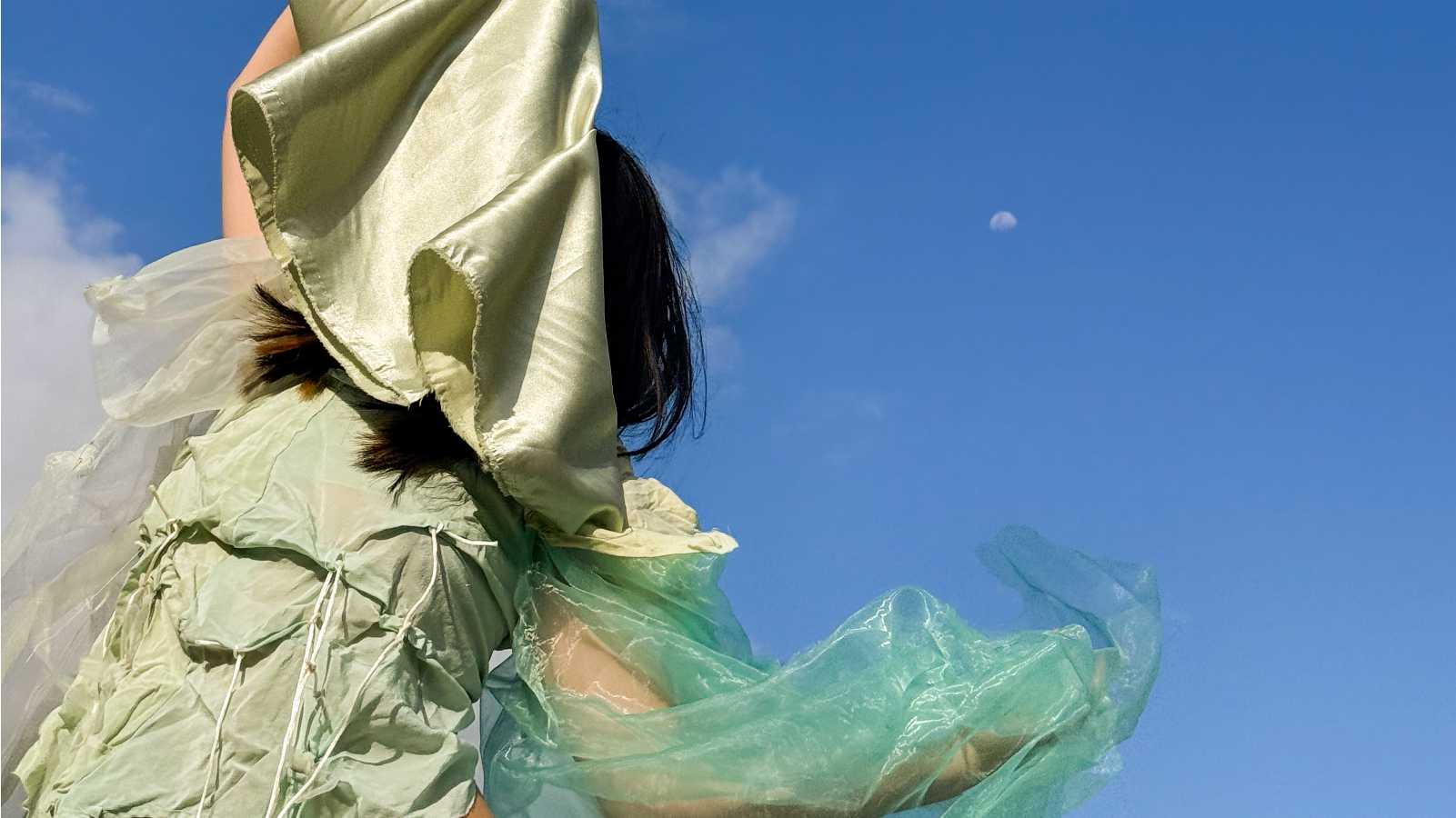
Anchored in the erased coastlines of Hong Kong, Sea-Ghosts fights to remember a time when salt was a gift to Hong Kongers. Blending the materiality of places with choreography, this performance-exhibition allows sea spirits in their geological, spiritual and political forms to wake up from centuries of land reclamation and massacres.
The scars of imperial-colonial controls are deep from 2000 years ago. As ideal sites of salt-farming, the earliest inhabitants were forced labourers who produced salt for China from 119BC, until a revolution in 1197, which resulted in bloody massacres. Salt-farming continued on these coastlines – the boundaries of Hong Kong – under continuously violent controls into the 1960s, as British colonialists dumped mountains onto seas, up until the current police state.
From washing rocks, gathering sea-water, making paper by adopting the sun practices of salt-farmers, Sea-Ghosts proposes that forging renewed spiritual connections to land is the urgent decolonial work that will gradually dissolve the violent human dominance to nature, forced upon by both the British and the Chinese. Between wet and dry, sea and land, Sea-Ghosts strives to build a collective Hong Kong identity where migration is resistance and all colonial imaginations are dissolved.
This work was made possible, in part, through the support of Latitude, a residency and exchange program developed by the Indonesian Dance Festival, Dance Nucleus (Singapore), Performance Space (Australia).
Credits:
Choreographer : Natalie Quan Yau Tso
Scenographer : Natalie Quan Yau Tso
Performers : Natalie Quan Yau Tso
Music : Dessert Empress
Costume Design : Natalie Quan Yau Tso
Dramaturg : Imogen Yang
Producer : Emma Cao
Co-Produced by:
Performance Space & Dance Nucleus
Venue: Teater Luwes, Institut Kesenian Jakarta