Five young choreographers performed their works, dance practitioners exchanged insights, while performing arts managers collaborated to make Lawatari: Yogyakarta happen.
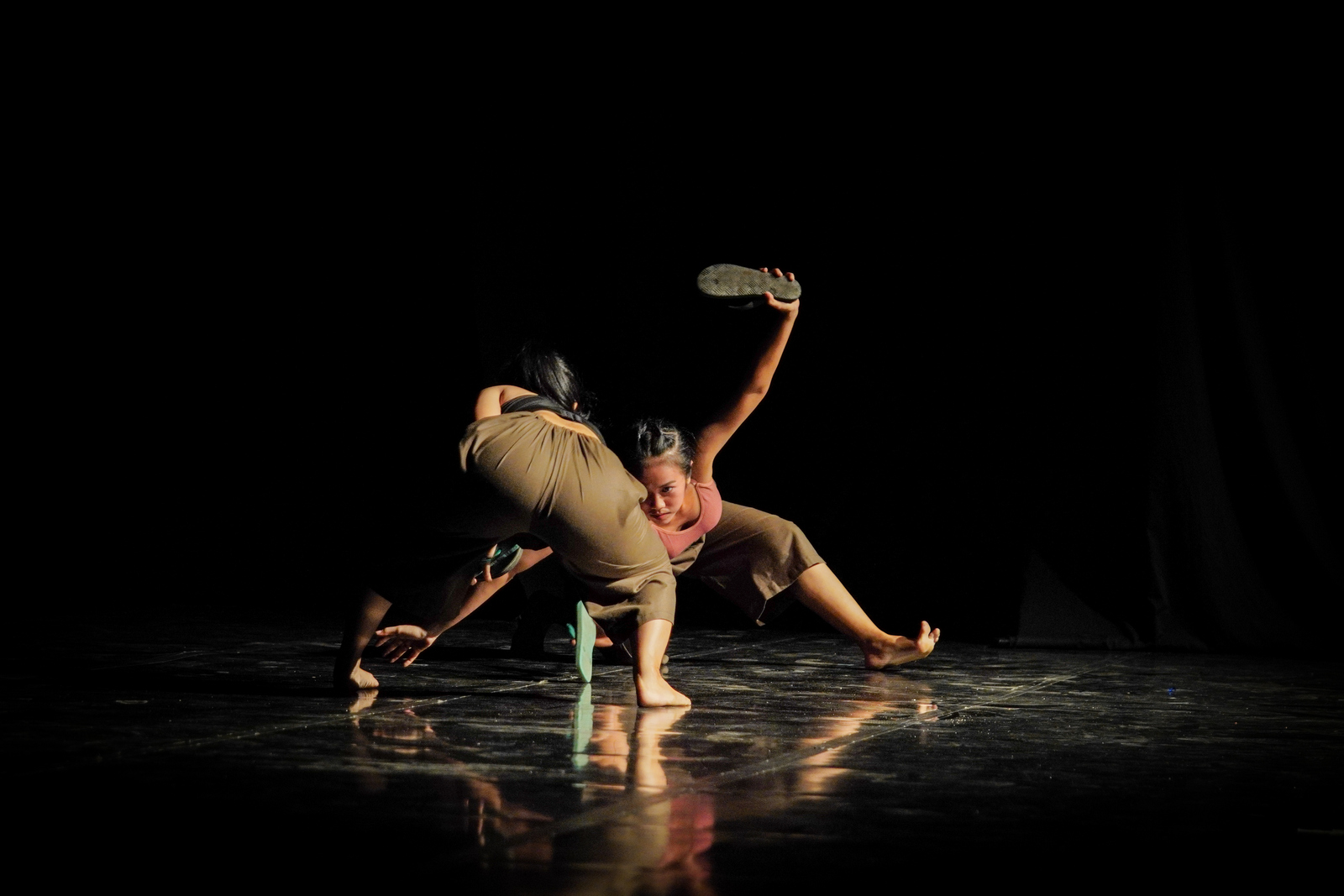
"Ganda" by Valentina Ambarwati.
“The challenge is not finding young choreographers to perform. Instead, it is to select among many talents in Yogyakarta," said Nia Agustina, producer and artistic director of Lawatari: Yogyakarta and co-founder of Paradance. As a practitioner who supports young choreographers in their career trajectory, Nia has layered considerations when choosing works for Lawatari, an event that connects IDF with performing arts centres in several cities in Indonesia.
Nia and Mila Rosinta Totoatmojo, choreographer and founder of MAD Laboratory, decided alongside IDF to present selected young choreographers whose works have been developed in dance laboratory programs. Megatruh Banyu Mili and Ni Putu Arista Dewi have worked with Paradance, while Sri Cicik Handayani and Valentina Ambarwati have developed their works with MAD Laboratory. The fifth artist is Siti Alisa, an alumna of Kampana, IDF’s work incubation program.
From an arts management perspective, Lawatari is also a collaborative laboratory. This laboratory is initiated to exchange insights about unique production practices in each location. IDF team, which is predominantly based in Jakarta, coordinates online with collaborator teams in Makassar, Padang Panjang and Yogyakarta. In Yogyakarta, we met a working team of mostly women, similar to team IDF. Together with Mila and Nia, we work to design programs, organize budgets, seek technical solutions to accommodate the needs of each work presentation, promote the event, and handle the dynamic backstage needs. Before starting Lawatari: Yogyakarta weekend, we put our hands and hearts together in prayer for the series of events.

Friday (19 January 2024) started with a Dance Talk about sustainable arts strategies at Eighteen Coffee, JNM Bloc. Siti Alisa, Mila Rosinta, and Scholastica W. Pribadi (Loka Art Studio) discussed with Nia Agustina about the things they do to develop their artistic careers amidst financial, social and personal challenges.
“When a work is created for a commercial project, does it count as more inferior to one created out of “idealism”? This question was posed by Linda Mayasari, IDF curator during the Q&A session. The audience fell silent in reflection for a moment. The insights and tips shared in the discussion sparked an exciting conversation with the audience, mostly practitioners and some performing arts students.
The discussion room layout was immediately changed to welcome local media and community members. The intimate gathering started with dinner. Around 20 journalists and community members who attended had the opportunity to interact with the Lawatari: Yogyakarta team as well as the five artists who were scheduled to present their work in the following two days.
The weekend started at Studio Banjarmili, a performing arts facility founded by the late Indonesian dance maestro Martinus Miroto. One of Miroto's legacies is the Miroto Dance Company, and Lawatari provides an opportunity to share his insights with young dance practitioners through a masterclass led by two of his former students: Agung Gunawan and Anter Asmorotedjo. This program was warmly welcomed. Enrollment slots offered through an online open call quickly filled up. "This program is important because it is in line with Pak Miroto's lifelong ideals, namely the transfer of knowledge from one generation of dance practitioners to another," said Nia.

"Budi Bermain Boal" by Megatruh Banyu Mili.
The evening performance on the first day of Lawatari (Saturday, January 20) featured the works Atandang by Sri Cicik Handayani, Budi Bermain Boal by Megatruh Banyu Mili, and Ganda by Valentina Ambarwati. In Atandang, Cicik invited the audience to get to know the tayub tradition of Madura, her homeland. She highlighted the relations between genders in this tradition. Meanwhile, Budi Bermain Boal is a criticism of the uniformity of behaviour expected in schools during the New Order era. The name "Budi" is the standard name used in reading textbooks, while "Boal" has a double meaning - referring to the Indonesian word for ball and Augusto Boal, a theater figure from Brazil known for the Theater of the Oppressed movement. Meanwhile, Valentina was inspired by women who worked as goods carriers at Beringharjo Market, Yogyakarta. She tried to visualize their various roles in everyday life. At the end of the show, the audience got a chance to interact with the three artists on an Artist Talk session.
The talk further eliminated barriers between dance practitioners and their audiences. During recess, the audience took part in impromptu flash mobs. Reputable dance practitioner Didik Ninik Thowok who was present in the audience also took part.
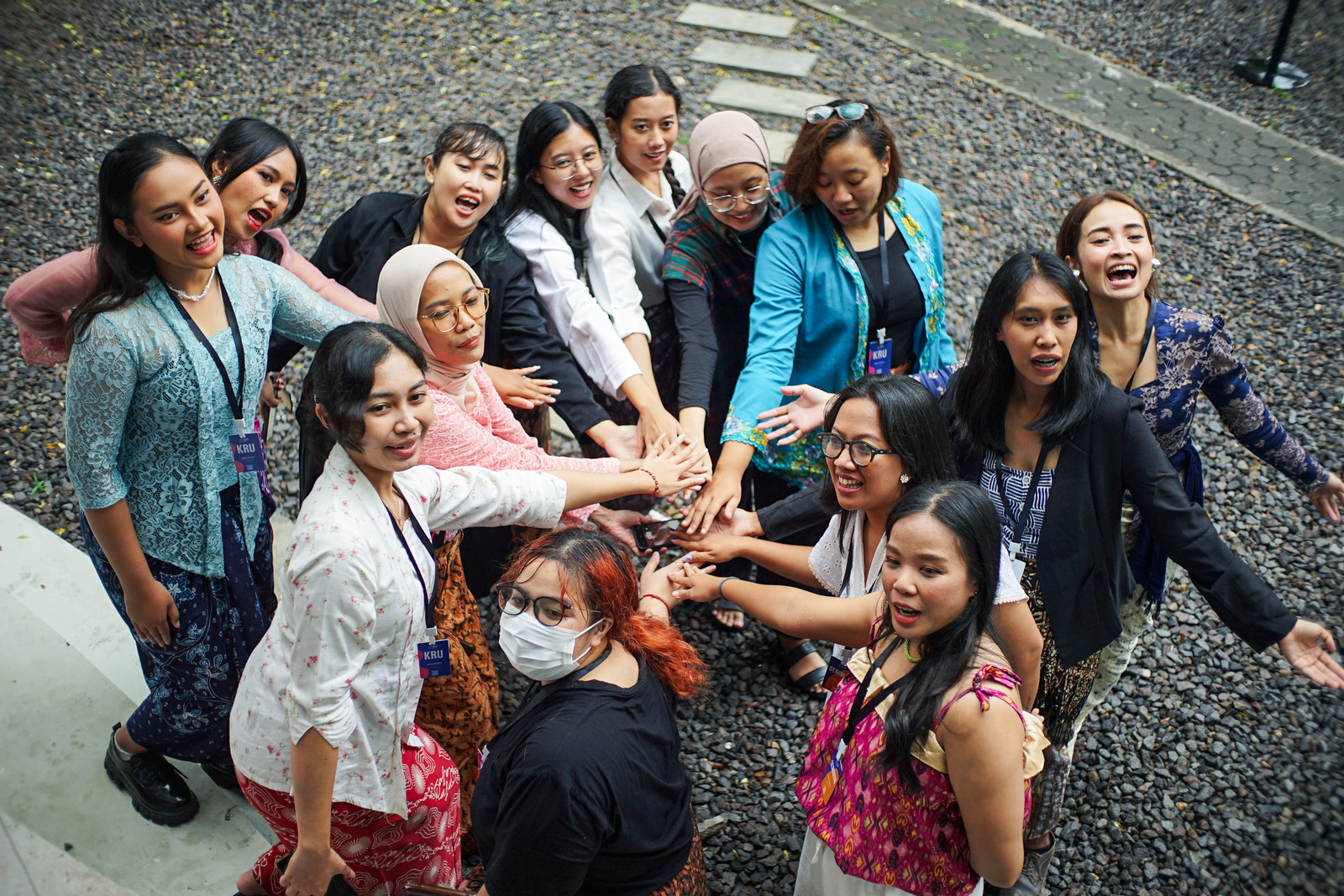
Lawatari: Yogyakarta was made possible by solid team work. This was where performing arts management played an important role, especially in remote collaboration across organizations. “Early in my career, I was doing things on my own - from creating content, to finding sponsors, to performing on stage. I instil the same values for the team members at Mila Art Dance School and MAD Laboratory," said Mila.
To exchange insights, IDF curator Linda Mayasari and festival manager Renata Rosari shared their experiences in arts management practices in their Workshop program “Arts Management: Creating Space to Grow Together". Registration was opened to the public via digital form. Participants who registered have an interest in, or were already working in arts management. They participated to broaden their knowledge in the field.
The final agenda on Sunday (21 January) was a performance of two dance works by Putu Arista Dewi and Siti Alisa. Arista, with her work entitled Suun, was inspired by the behavior of Balinese women when carrying items on their heads. This work questioned the role of Balinese women within the society. Alisa highlighted the reality of women in the physical and mental cycles they experience.
The end of Lawatari: Yogyakarta marks the conclusions of three Lawatari events as part Road to IDF 2024, ahead of the biannual festival, which will be held in November 2024. After curtain calls, what remains is a personal reflection of the performances. For those involved behind the scenes, moments like Lawatari are a reminder of what a strong collaboration could achieve.
All images are documented by Lawatari Yogyakarta