Credit: doc. Indonesian Dance Festival
RETNO MARUTI
Championing Freedom of Thought in Classical Dance
IDF 2026
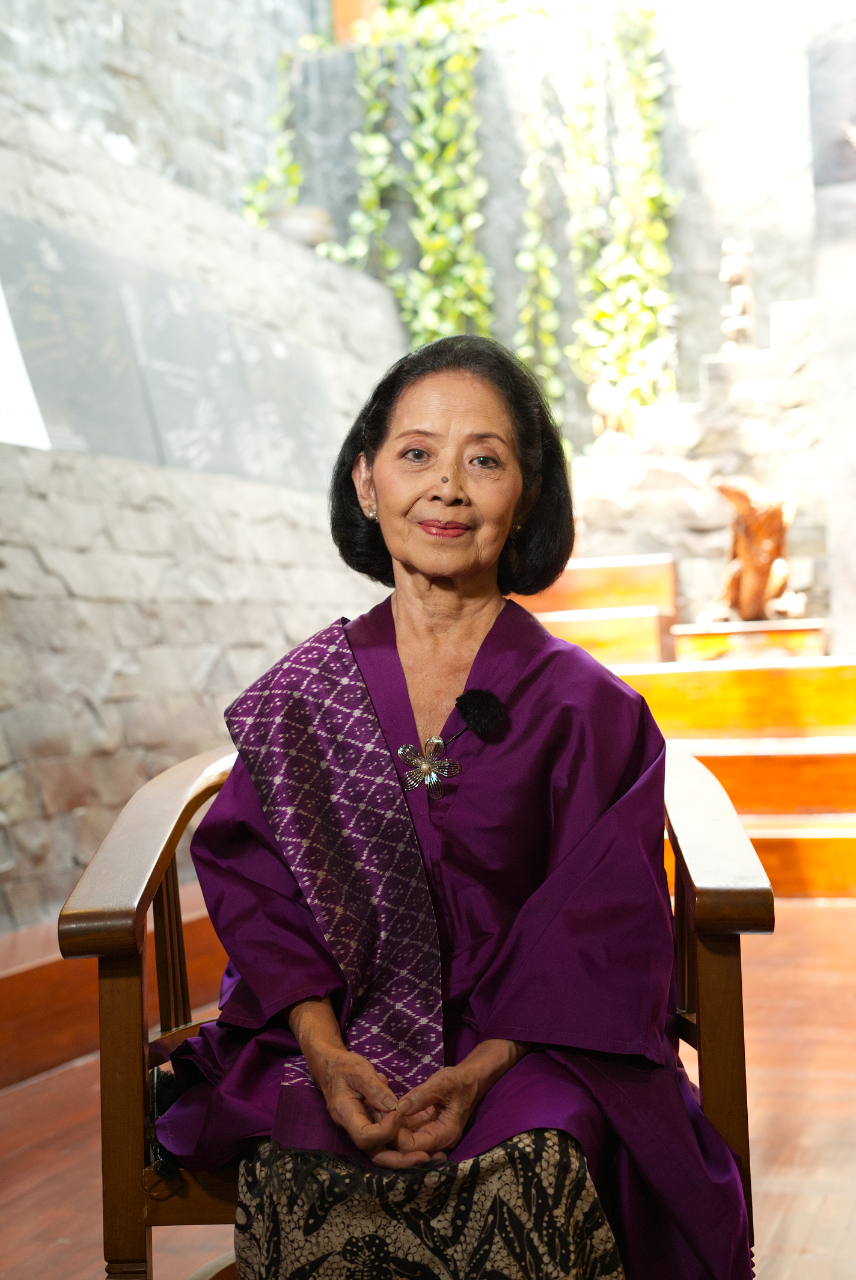
Throughout her five-decade career, Retno Maruti has channeled her ideas as a woman who embraces freedom of thought. She also fosters a spirit of collectiveness in her dance studio, Padnecwara.
Throughout her five-decade career, Retno Maruti has channeled her ideas as a woman who embraces freedom of thought. She also fosters a spirit of collectiveness in her dance studio, Padnecwara.
One of the most enduring traditions in dance is the passing down of knowledge from one generation to the next. Every dance figure works hand-in-hand with their mentors who impart movement, emotional depth, and life philosophy. In time, they pass on the values they honed as dance practitioners to the next generation.

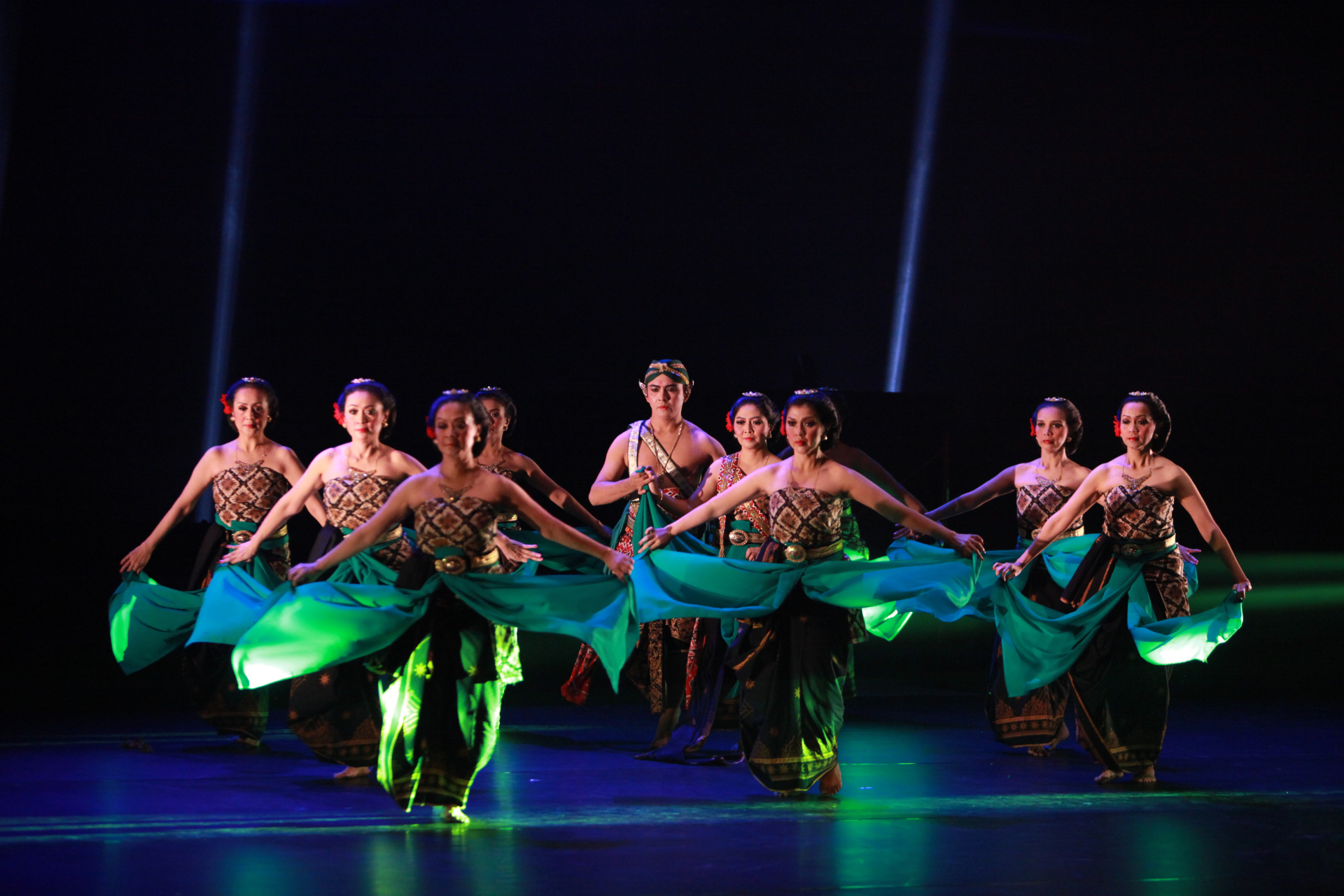
Credit: “Roro Mendut” by Retno Maruti. Indonesian Dance Festival 2014/Nindityo Adipurnomo
Artist couple Retno Maruti and Arcadius Sentot Sudiharto dedicated their lives to creating a learning space for a new generation of dance practitioners. Fifty years ago, they founded Padnecwara. Now based in Kramat Jati, East Jakarta, the studio functions as a large family united by a progressive spirit in dance. Productions are created collaboratively, and every rehearsal session offers a chance to sit together and enjoy meals prepared by Maruti.
“Maruti is a mother figure and a big sister to all Padnecwara members. When there were no rehearsals, we all missed Maruti’s Solo-style home cooking. The communal meals shared by all studio members after practice were among the moments we look forward to most,” says Nungki Kusumastuti, an IDF co-founder and a Padnecwara member during the 1990s. She had previously been a student of Maruti’s at the Jakarta Institute of the Arts (IKJ).
Born in Solo in 1947, Maruti learned arts within the vicinity of Surakarta Palace. During her junior high school years, she landed her first major dance role: the Golden Deer (kijang kencana) in the Ramayana Ballet at Prambanan Temple. She performed this role for eight years (1961–1968)—a tenure of monumental significance, as 1961 marked the premiere of Ramayana Ballet. The 1960s was also a period when Maruti actively participated in various Indonesian artistic missions on the international stage.

Credit: Arsip Padnecwara/Laks
Maruti deepened her expertise by studying under several prominent figures in dance and vocal. Masters of the Surakarta traditional dance —such as the late R.T. Koesoemokesawa, R. Ay. Lakmintorukmi, and R. Ay. Sukorini, as well as Nyi Bei Mardusari—were among her mentors. Aspiring to create her own original works, Maruti also equipped herself with knowledge of dramaturgy, stage makeup, costume design, and production management.
In 1976—coinciding with the founding of Padnecwara—Maruti’s first original work was created. Damarwulan was produced as a langendriyan piece (a distinctive Javanese performing art blending dance, music, song, and narrative) but was tailored for the urban audience in Jakarta. Her background in Surakarta-style dance made her realize that, while the majority of the audience was of Javanese descent, not everyone spoke the language, and their pace of life was faster. This realization drove Maruti’s artistic decision to convey stories through songs (tembang). The songs served as a bridge, allowing non-Javanese-speaking audience members to enjoy the performance.
As a dramaturg, Maruti is also known for her progressive thinking regarding gender roles in dance works adapted from the classic Ramayana and Mahabharata epics. A prime example is her reinterpretation of the story of Rama, Sinta, and Rahwana in the work titled Kidung Dandaka (2016). She re-examined the character of Sinta—whose fidelity had been called into question—and, through this contemporary reading of a classic legend, conveyed values of gender equality. This work serves as a form of activism—subtle yet enduring—because an unconventional work can be restaged and archived as part of the history of Indonesian contemporary dance.
Credit: Riskya Duavania
“One of my strongest memories of Mbak Maruti is when she won the dance scriptwriting competition held by the Jakarta Arts Council in 1978,” recalls Maria Darmaningsih, a co-founder of the IDF. “This experience left a strong impression on me because, at first glance, it seems classical, but on closer examination, there are many ways in which it challenges conventions.”
“Maruti’s imprint is visible in every aspect of the works presented by Padnecwara. We can glimpse her thoughts on gender roles through the narrative, enjoy the songs she wrote, and admire the costumes, makeup, and the myriad details that allow a dance piece to resonate with its audience,” Maria adds.
Another of Maruti’s bold moves was her decision to reimagine the Bedhaya dance formation. In the piece Abimanyu Gugur (1978), she deployed two groups of dancers—a total of 18 performers rather than the traditional nine—to depict the battle between the Pandavas and the Kauravas. This was a daring innovation undertaken by a young choreographer; Maruti was just 31 years old at the time. Beyond its unique formation, this work garnered significant attention for its popular dramaturgical style—a craft Maruti honed through her studies with prominent theater figures.
Besides her artistic works, Maruti is known as someone who is never afraid to ask questions and is equally generous in sharing her knowledge. In Padnecwara’s early days, the members came from diverse educational backgrounds—ranging from secretarial work and accounting to management. Maruti actively involved them in the production process, even drawing upon their professional disciplines to ensure quality in performance management, both artistically and operationally.
For Nungki, Maria, and many other artists who have collaborated with her, Maruti is more than just a colleague; she is a kindred spirit and a fellow performer on a shared journey. It is no surprise, then, that when Maruti reached a point of exhaustion, friends stepped in wholeheartedly to help. There were times when Padnecwara alumni came together to bring to life productions Maruti had written but had been unable to stage due to logistical constraints. Members took on various behind-the-scenes roles—from ticket sales to securing sponsorships—to bring Maruti’s vision to life.
Coinciding with Padnecwara’s 50th anniversary in 2026, IDF honours Retno Maruti as a multitalented artist whose progressive spirit continues to shape the dance landscape. Through her artistic journey, we also recognise the role of a mother figure who not only paved the way for a new generation of dance practitioners, but also nurtured their growth and created space for new possibilities to emerge.